
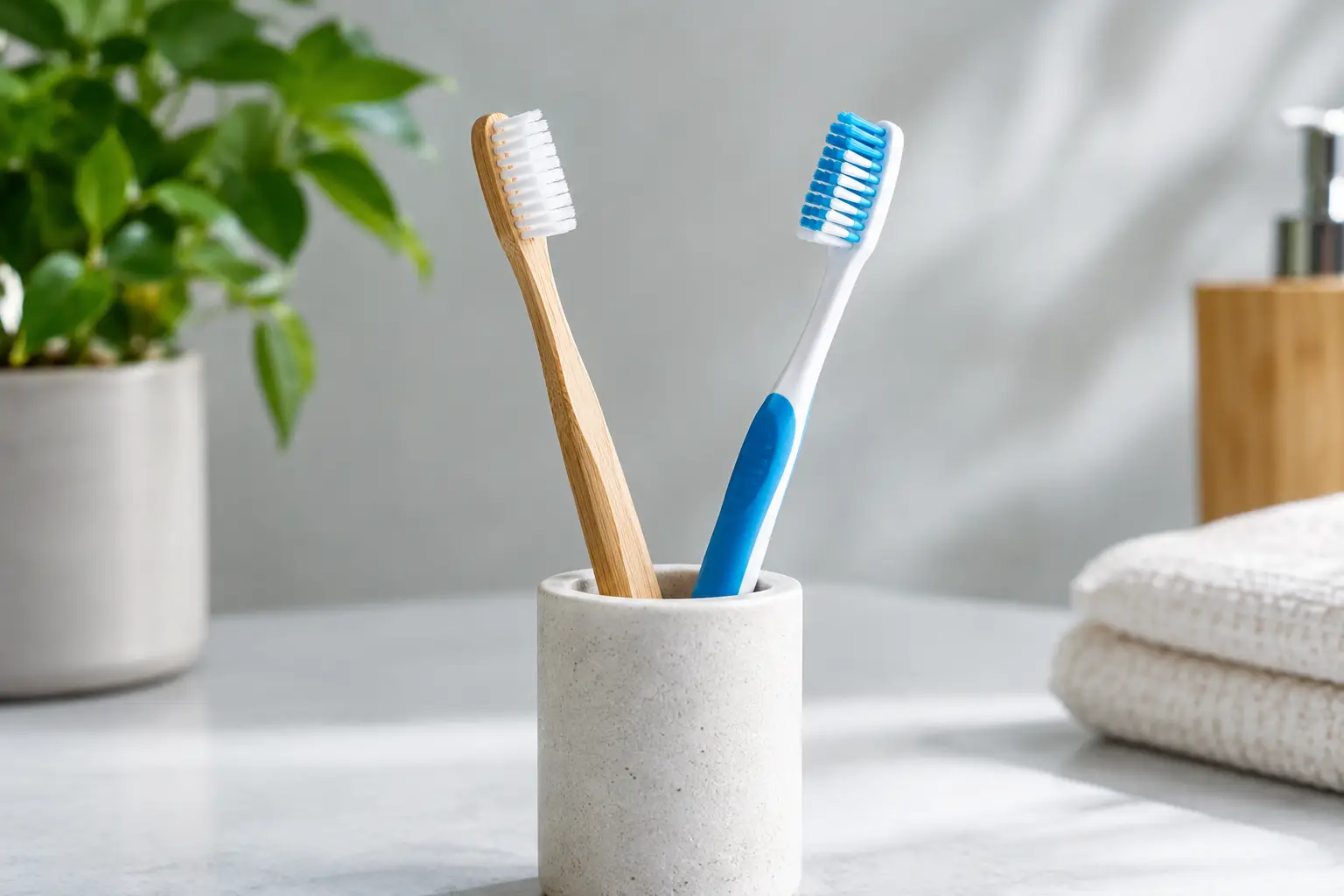
Bamboo Versus Plastic Toothbrush: Which Fits?
Your toothbrush is one of the smallest objects in your bathroom, yet it is used twice a day and replaced several times a year. The bamboo versus plastic toothbrush choice is not really about choosing style over performance. It is about finding a brush that feels good in your hand, cares for your gums and creates less unnecessary waste when it is time for a fresh head.
For many households, plastic toothbrushes have simply been the default. They are familiar, inexpensive and easy to find. Bamboo offers a different kind of everyday upgrade: a natural-looking handle, a lighter visual footprint on the bathroom counter and a more considered alternative to a fully plastic disposable item. The best choice still depends on how you brush, what your dentist recommends and whether you prefer a manual or rechargeable routine.
Bamboo versus plastic toothbrush: the material difference
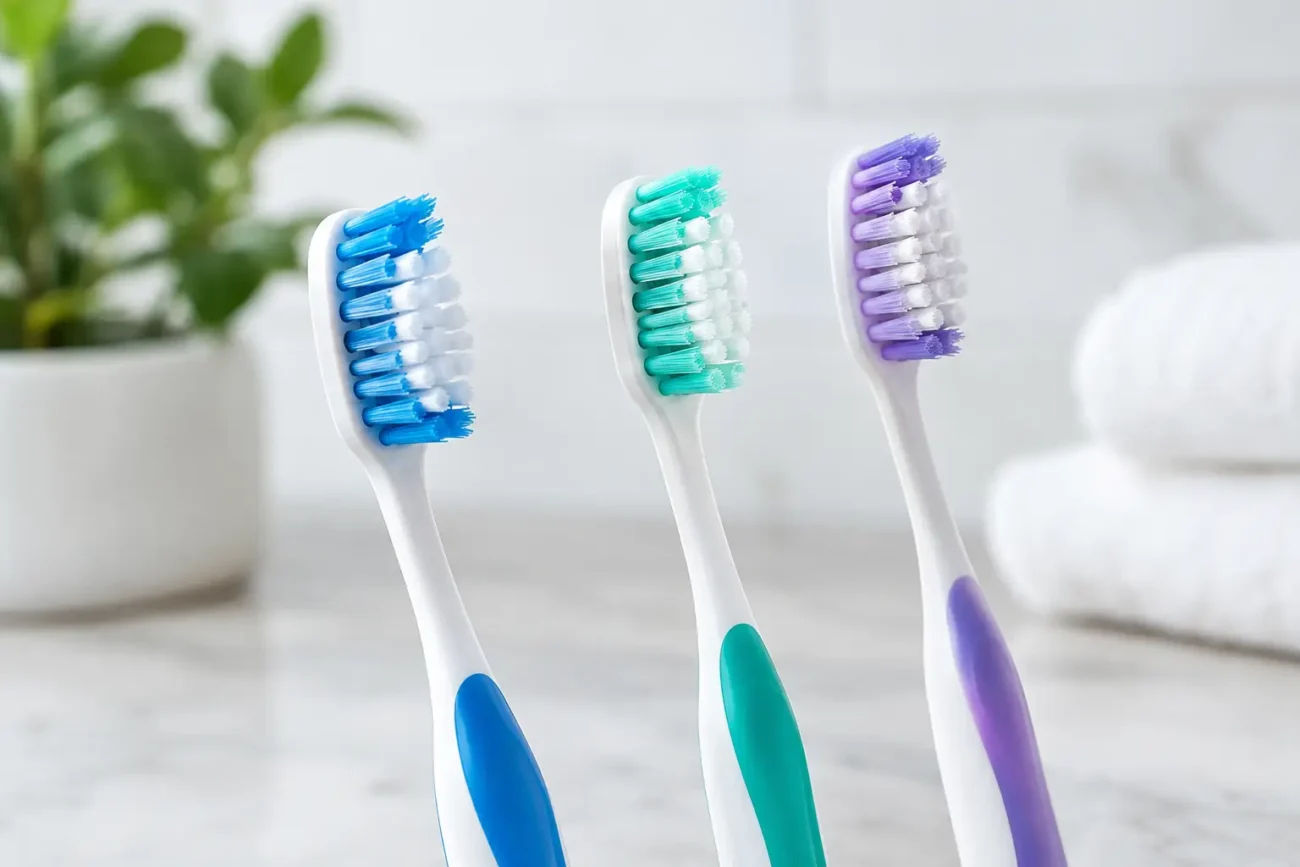
A conventional manual toothbrush usually has a plastic handle, plastic bristles and often rubberised grip sections. It can be durable, but that durability becomes a drawback once the brush is worn out. Mixed materials are difficult to recycle through normal household collections, so most used plastic toothbrushes end up in general waste.
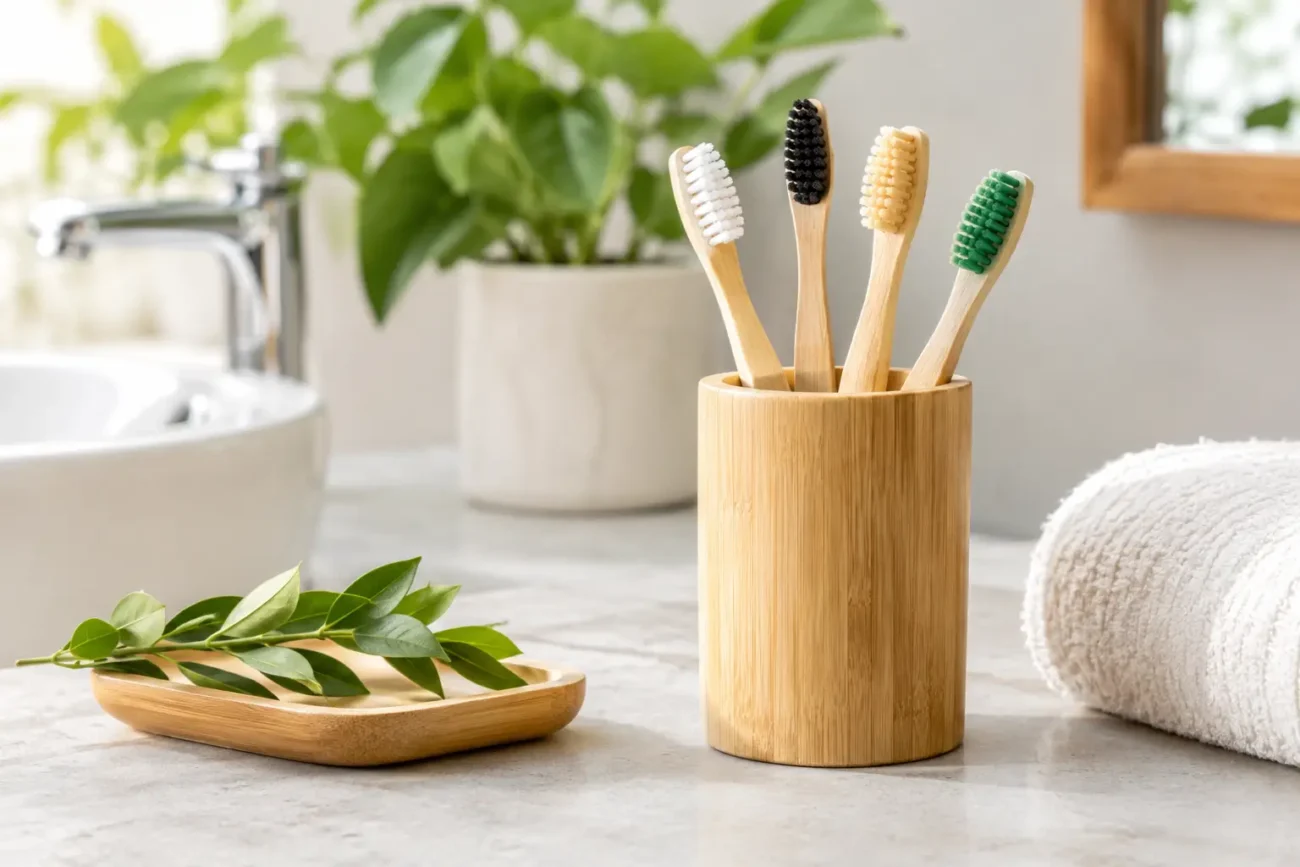
A bamboo toothbrush replaces the handle with bamboo, a fast-growing plant material that brings warmth and simplicity to an object normally designed to be thrown away. A well-finished bamboo handle can feel smooth, balanced and comfortable, with a clean, minimalist look that suits a more considered bathroom routine.
That does not mean every part of a bamboo toothbrush disappears naturally. Most modern brushes use nylon or other synthetic bristles because they clean effectively, hold their shape and meet practical hygiene expectations. Some bristles may also be charcoal-infused, which gives them a distinctive dark finish. Charcoal bristles can be an attractive feature, but they should not be treated as a substitute for careful brushing, fluoride toothpaste or regular dental check-ups.
The most honest environmental advantage is in the handle. With a bamboo brush, you are reducing the amount of plastic in a product you replace regularly. When the brush reaches the end of its life, remove the bristles where possible and check your local guidance before composting or disposing of the handle. Conditions vary, and a bamboo handle coated with certain finishes may not be suitable for every home compost bin.
Does bamboo clean as well as plastic?
The cleaning result comes far more from the bristle quality, brush-head shape and your technique than from the handle material. A bamboo toothbrush with soft, neatly trimmed bristles can clean teeth thoroughly while being kinder to the gumline. In fact, many people find that switching from medium or firm bristles to soft bristles improves comfort without compromising their routine.
Brush for two minutes, twice daily, using gentle pressure and small movements along the gumline. Scrubbing hard can irritate gums and wear down enamel, whatever toothbrush you use. The handle should support control, not force.
Plastic brushes also come in many excellent designs, including compact heads, angled necks and textured handles. If you have braces, gum recession, limited hand movement or specific dental treatment needs, the right brush may be the one your dentist or hygienist recommends, regardless of material. Sustainability works best when it supports a routine you will genuinely keep.
Comfort comes down to fit
Bamboo handles tend to feel firmer and more natural in the hand than moulded plastic. They are often lightweight, with a simple cylindrical or gently shaped profile. For some people, that clean design is exactly the appeal. Others may prefer the contoured grip of a plastic brush, especially if they need extra stability.
There is no universal winner here. If you enjoy a streamlined handle and a calm, natural bathroom aesthetic, bamboo is likely to feel like a practical fit. If a highly shaped non-slip grip helps you brush comfortably, a plastic handle may serve you better. The key is using a brush you can manoeuvre easily around every tooth.
Waste is more than what happens at the bin
A plastic toothbrush can last for centuries in the environment, even though it is typically used for around three months. That mismatch is why so many people are rethinking the standard disposable brush. Reducing plastic at the source is often simpler than relying on specialist recycling schemes that may not be available in every area.
Bamboo has its own considerations. It must be grown, harvested, processed, transported and finished, just like any other material. Responsible choices are not about claiming zero impact. They are about choosing materials thoughtfully, buying what you will use and avoiding needless replacements.
Multi-packs can make sense for families and households that know they will use each brush on schedule. They reduce the risk of reaching for an old, frayed toothbrush because there is no replacement nearby. On the other hand, avoid buying more than you can store properly. A toothbrush kept in a damp, closed cupboard for long periods is not ideal.
Caring for a bamboo toothbrush
Bamboo is a natural material, so a little care helps keep the handle looking its best. After brushing, rinse the bristles thoroughly and shake off excess water. Store the toothbrush upright in an open holder where air can circulate. Do not leave it sitting in pooled water or sealed inside a damp travel case once you are home.
A dry handle is a happier handle. Surface darkening can happen if bamboo stays wet, but good airflow reduces the chance of this. The same basic hygiene rule applies to any toothbrush: keep it clean, let it dry and avoid sharing it.
Replace your brush, or replacement head, about every three months. Change it sooner if the bristles are splayed, after an illness, or whenever your dental professional advises. Worn bristles do not clean as precisely around the gumline, and no sustainable material can compensate for a brush that is past its best.
What about a bamboo electric toothbrush?
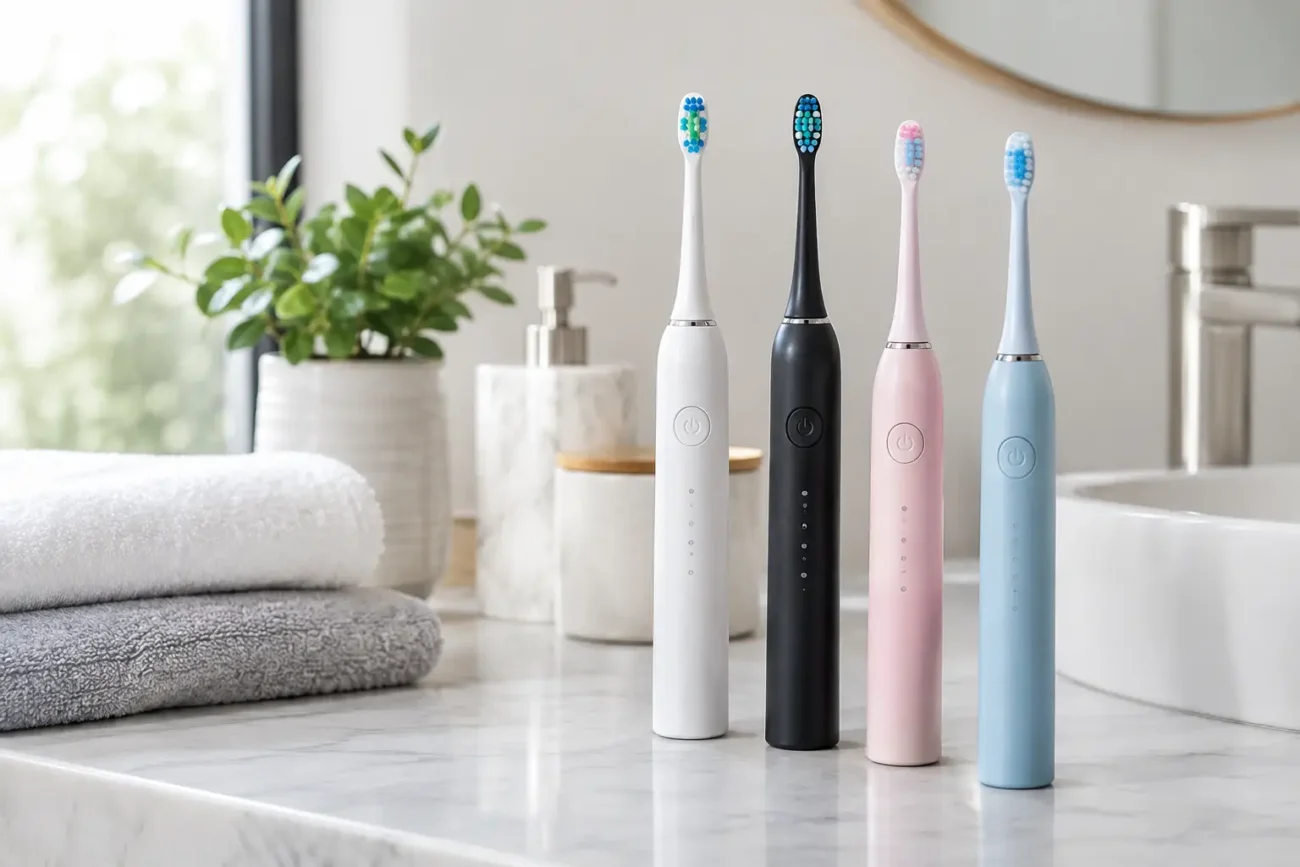
The manual bamboo versus plastic toothbrush conversation changes slightly when power enters the picture. An electric toothbrush has electronic components, a battery and a charging system, so it will never be fully compostable. Yet a rechargeable model can still be a lower-waste choice than repeatedly replacing disposable battery-powered brushes or whole plastic devices.
A bamboo electric toothbrush offers the convenience many people want – timed brushing, multiple cleaning modes and consistent movement – while bringing a more refined, natural finish to the handle. It is particularly useful for people who struggle to maintain even pressure or a full two-minute brushing time with a manual brush.
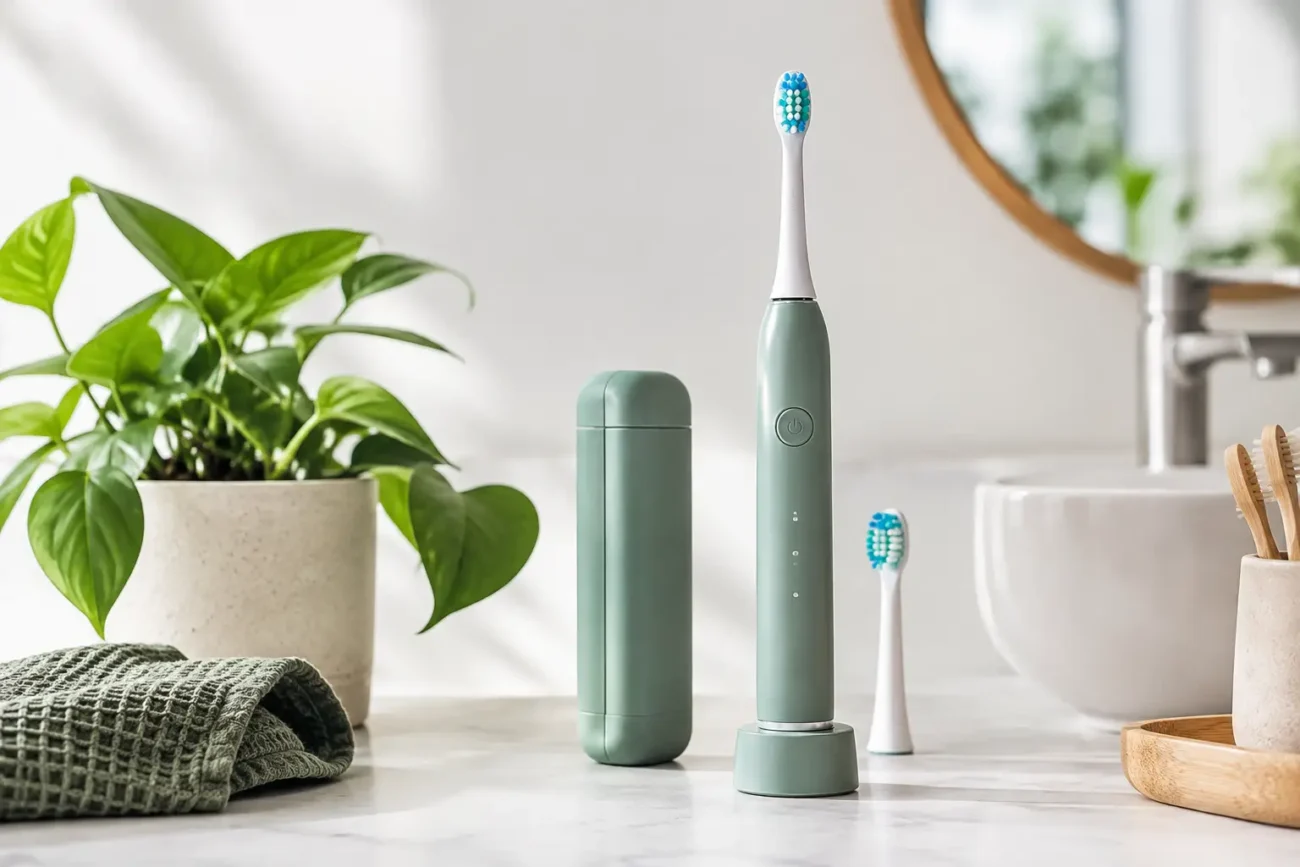
The most important feature is replaceable brush heads. Keeping the rechargeable handle for the long term and changing only the head as needed reduces the amount of material you replace. Look for soft bristles, a secure head attachment, dependable charging and a battery life that suits your routine. A compact brush that is pleasant to use is far more likely to stay in daily rotation.
MAXDENT designs this balance around everyday performance: bamboo styling, soft bristles, rechargeable convenience and replacement-head practicality without the bulky look of conventional plastic electric brushes.
Choosing the right brush for your routine
Choose bamboo if you want to reduce plastic in a frequently replaced bathroom essential, appreciate a minimalist natural finish and are happy to dry the handle properly between uses. It is a strong fit for adults, teenagers and design-conscious households looking for an easy sustainability swap.
Choose plastic if you need a very specific ergonomic grip, a specialist brush recommended by your dental professional, or a design that is not currently available in bamboo. There is no value in buying a more sustainable option that is uncomfortable enough to leave unused.
Choose a rechargeable bamboo electric brush if you want extra brushing support and prefer to keep one attractive handle for the long term. This option can be especially appealing if you are moving from a basic manual brush but do not want another bright, bulky plastic device on the counter.
The most sustainable toothbrush is not the one with the loudest claim. It is the one you use gently, replace on time and feel good about reaching for every morning and night. A bamboo handle will not transform your oral health by itself, but it can make a familiar habit feel more intentional – one clean, comfortable brush at a time.

Add a review
Your email address will not be published. Required fields are marked *