
Rechargeable Versus Battery Toothbrush: Which Wins?
A toothbrush sits on your bathroom shelf twice a day, so its power source is not a small detail. The rechargeable versus battery toothbrush decision affects how your brush feels in the hand, how reliably it cleans, what you throw away and whether it suits your routine at home or away.
For many people, a battery-powered brush seems like the simple option: buy batteries, switch it on and replace them when they run flat. A rechargeable electric toothbrush asks for a charging habit, but can offer a more refined daily experience and fewer disposable parts over time. The right choice depends on what you value most.
Rechargeable versus battery toothbrush: the practical difference
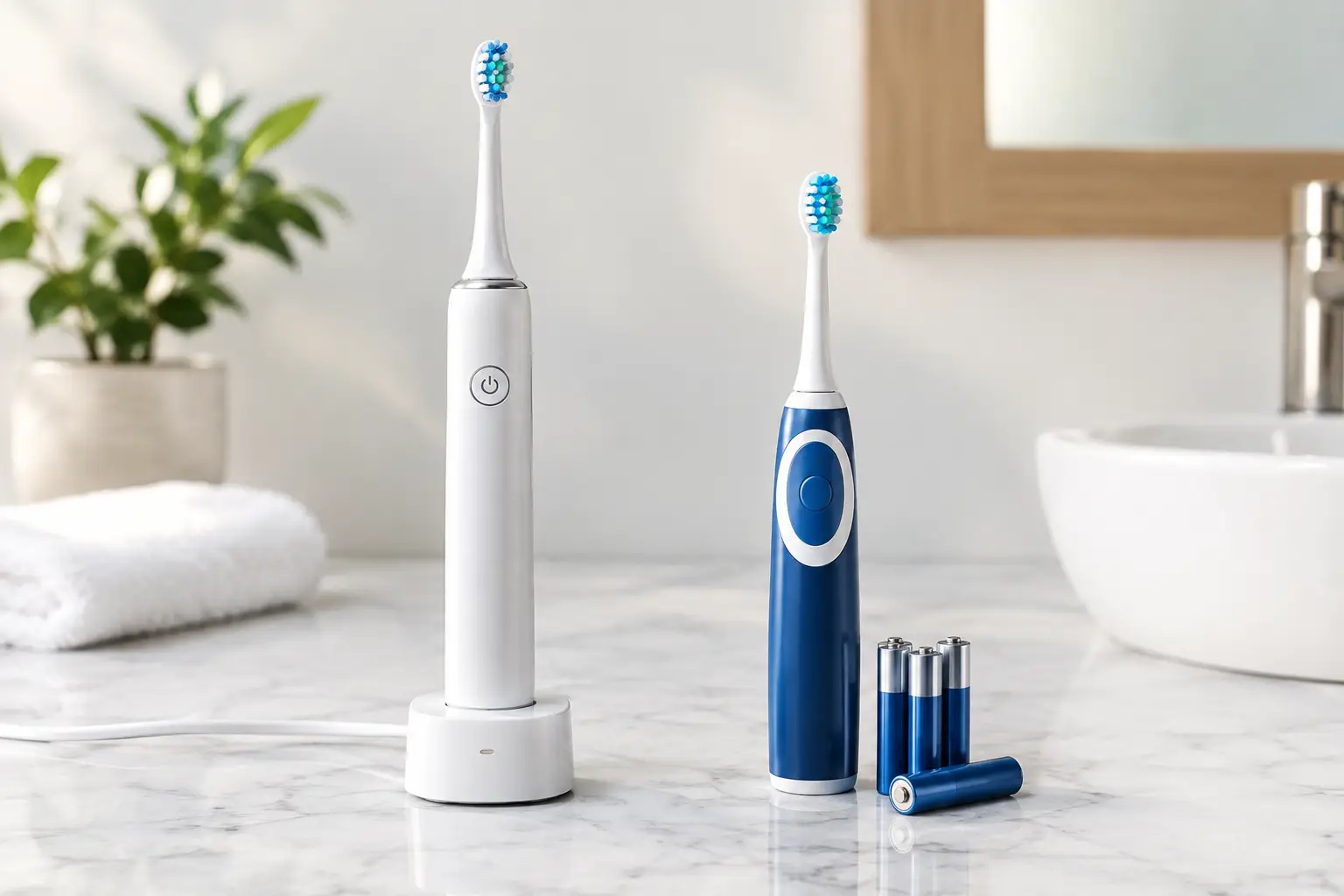
Both types use powered movement to help you clean your teeth. Depending on the brush, that may mean oscillation, vibration or sonic-style pulses. The key difference is where the energy comes from. A rechargeable toothbrush has an internal battery that you replenish with a charging cable or base. A battery toothbrush usually runs on replaceable alkaline batteries.
That distinction changes the design. Battery brushes often need a wider handle to hold AA or AAA batteries, and they are commonly made as lower-cost, straightforward devices. Rechargeable brushes are usually designed for ongoing use, with more consistent power, a slimmer feel and, in many models, features such as multiple cleaning modes or a timer.
Neither format automatically makes someone better at brushing. Technique still matters. Use gentle pressure, guide the bristles along the gumline and take enough time to clean every surface. A powered toothbrush is most useful when it makes those good habits easier to keep.
Cleaning performance and daily comfort
A rechargeable brush generally provides a steadier level of power from the first use after charging until its battery needs topping up. That can create a more consistent brushing feel, particularly on brushes with purpose-built modes for everyday cleaning, sensitive teeth or polishing.
Replaceable-battery toothbrushes can clean effectively too, especially for someone moving from a manual brush for the first time. Their performance may gradually soften as the battery drains, however. It is easy not to notice until the brush feels slower or less satisfying, which can mean putting off a battery change longer than you should.
Comfort is just as relevant as power. A light, balanced handle is easier to manoeuvre around back teeth without gripping too tightly. Soft bristles are a sensible choice for most people because they can clean thoroughly while being kinder to gums when used with a gentle touch. If you experience persistent bleeding gums, pain or sensitivity, speak with your dentist or hygienist rather than relying on a different brush alone.
Rechargeable models also tend to have two-minute timers and pacing signals. These are small features, but they are useful. Brushing for a full two minutes can feel longer than expected when you are rushing out the door, and a timing cue helps turn a recommendation into a repeatable routine.
Cost: the cheaper brush is not always the lower-cost choice
A battery toothbrush normally costs less at the till. For an occasional powered-brush user, or a household that needs a spare brush for visitors, that lower upfront price can make perfect sense. The ongoing cost arrives later in the form of replacement batteries.
A rechargeable toothbrush costs more initially because it includes a battery and charging system. Over months and years, it may be the better-value option if you use it consistently. You are not regularly buying disposable batteries, and you only need to replace the brush head when its bristles are worn.
The comparison is not only about pounds. Look at replacement-head availability before choosing a rechargeable model. A durable handle is only practical if compatible heads are easy to find and simple to fit. Most brush heads should be changed around every three months, or sooner when the bristles splay, fray or lose their shape.
For families, a rechargeable handle with replaceable heads can also reduce bathroom clutter. Each person should have their own head, clearly identified and stored so it can dry between uses. Do not share brush heads, even within the same household.
Waste and materials: where the eco choice becomes clearer
Disposable batteries create a recurring stream of waste. They should not be thrown into general household rubbish because their materials need appropriate recycling. A battery-powered toothbrush can therefore involve two waste paths: the plastic brush itself at the end of its life and the batteries it uses along the way.
A rechargeable option avoids frequent battery replacements. This does not mean it has no environmental footprint. Its internal battery, electronics and charging components still need responsible end-of-life handling through local electrical recycling routes. But when a rechargeable handle lasts for years and only the head is changed regularly, it can reduce dependence on single-use batteries.
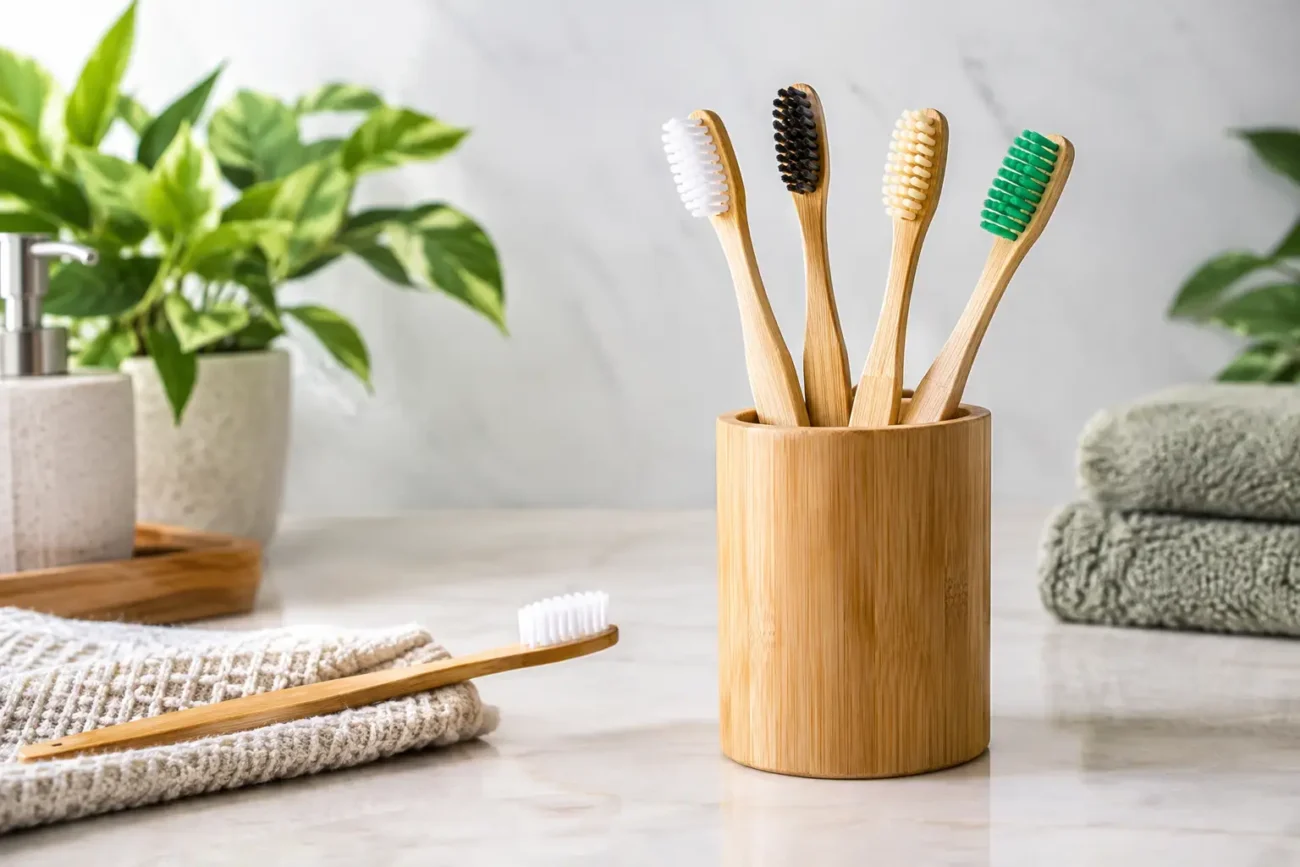
Material choices matter too. A bamboo handle brings a natural, warm finish to a product category dominated by glossy plastic. It can make an everyday essential feel more considered on the bathroom counter. That said, sustainability is not a reason to ignore product lifespan. The most thoughtful choice is one you will use properly, maintain well and keep for as long as it performs reliably.
Bamboo electric toothbrushes offer an appealing middle ground for shoppers who want electric convenience without the usual all-plastic look. MAXDENT pairs this minimalist material approach with rechargeable performance, soft bristles and replaceable brush heads, proving that a more natural-looking bathroom essential does not have to feel like a compromise.
Is a battery toothbrush better for travel?
It can be, but not always. A battery-powered toothbrush is handy for a long weekend or camping trip because you can pack spare batteries and avoid finding a socket. It is also an easy backup option if you know you will be away from power for an extended period.
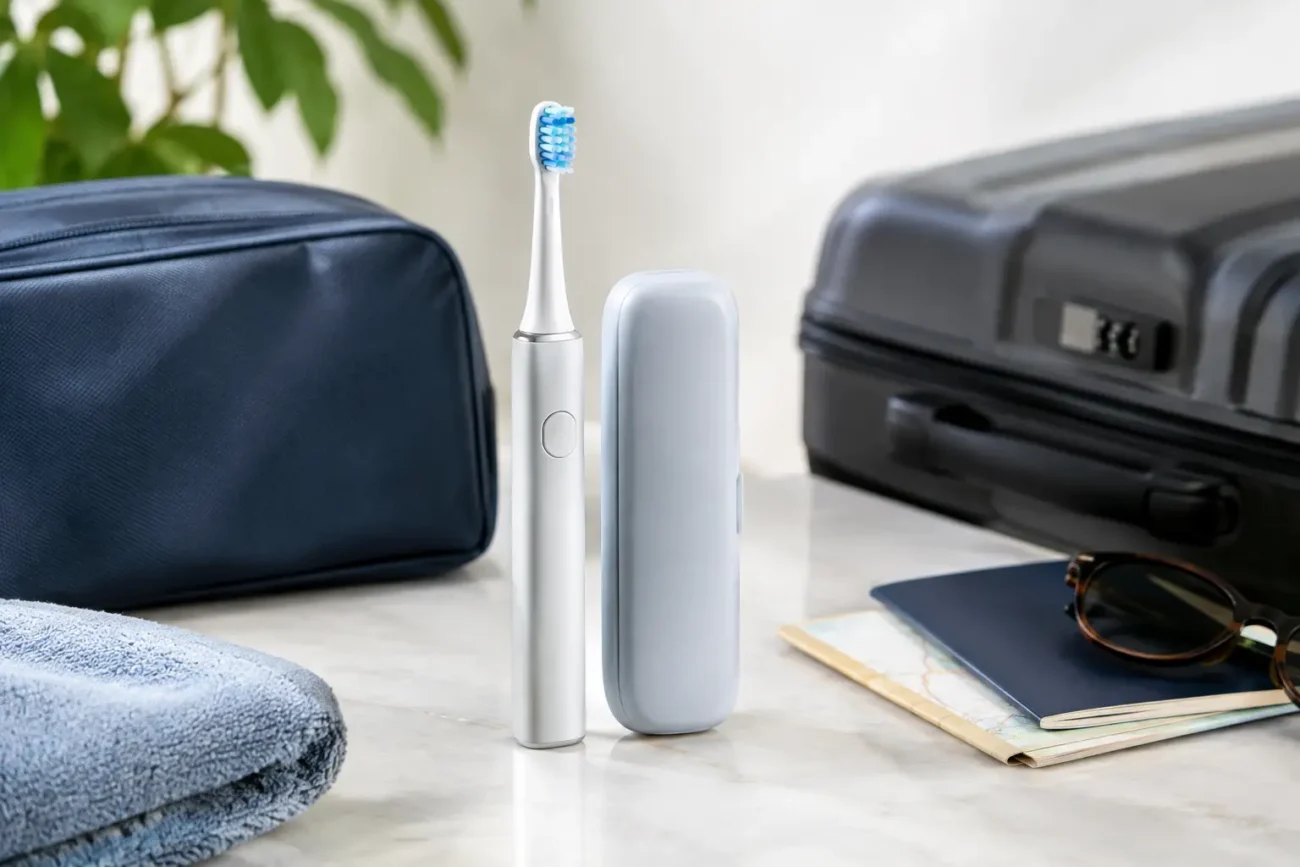
For most holidays and work trips, rechargeable models are still very manageable. Many hold enough charge for days or even weeks, depending on the brush and how often it is used. Charge it fully before leaving, pack the correct cable and use a ventilated travel case that protects the head without trapping moisture.
Before travelling abroad, check the charging requirements for your particular model. A USB-charged brush can be especially convenient, while a proprietary charging base may take up more space. If you share a bathroom in a small flat or travel with limited luggage, compact charging is worth prioritising.
Who should choose each type?
Choose a replaceable-battery toothbrush if you want the lowest initial spend, need a simple travel brush or are testing whether powered brushing suits you. It is uncomplicated, widely familiar and does not require a charging routine.
Choose a rechargeable toothbrush if you want a dependable everyday brush with fewer disposable batteries, a more polished design and features that support better brushing habits. It is particularly well suited to people who like an uncluttered bathroom, prefer a consistent brushing experience and want to replace heads rather than an entire device.
If you are deciding for a teenager, ease of use matters more than extra settings. A comfortable handle, soft bristles and a timer are often more valuable than a long list of modes. For adults with sensitive gums, look for a gentle setting if available and avoid pressing harder to chase a squeaky-clean feeling. More pressure is not better cleaning.
Make either toothbrush last longer
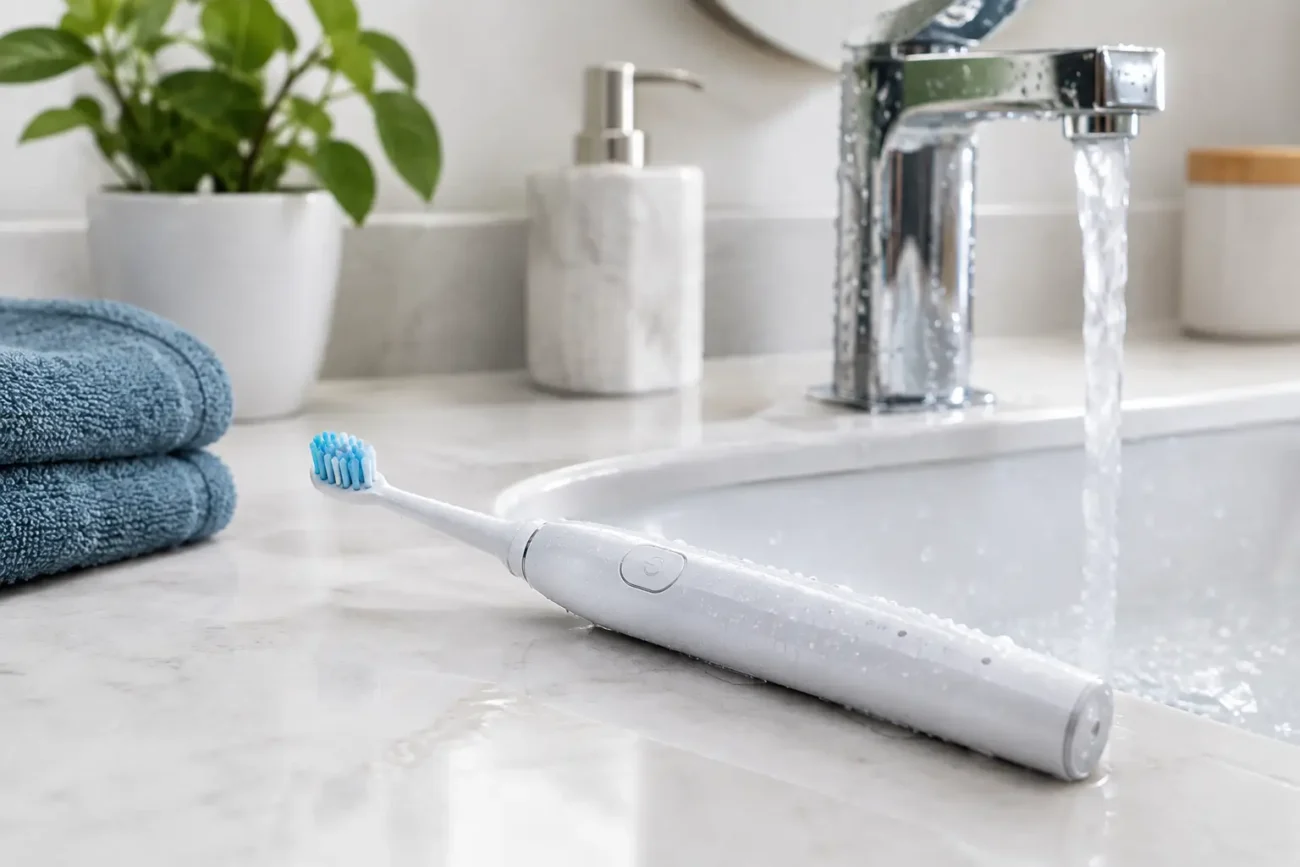
A few small habits protect your purchase. Rinse the head after brushing, shake off excess water and store the brush upright where air can circulate. Avoid keeping it permanently sealed in a damp case. Wipe the handle occasionally, especially around the point where a removable head connects.
With a rechargeable brush, top it up according to the manufacturer’s guidance rather than waiting until it has completely stopped every time. With a battery brush, replace batteries promptly when the motion weakens and recycle used cells through the appropriate collection point. In both cases, change the head on schedule and replace the whole device if it becomes damaged, unreliable or difficult to clean.
The best toothbrush is the one that makes your twice-daily routine feel easy enough to keep. Choose the power source that fits your life, then let soft bristles, gentle technique and a fresh brush head do the work.
Add a review
Your email address will not be published. Required fields are marked *