
How to Use an Electric Toothbrush Properly
A powered brush can make two minutes of brushing feel more effective, but only when you let the brush do the work. To use an electric toothbrush properly, you need less pressure, slower movement and a little more attention to each part of your mouth. That lighter technique can help protect your gums while giving every tooth the focused clean it needs.
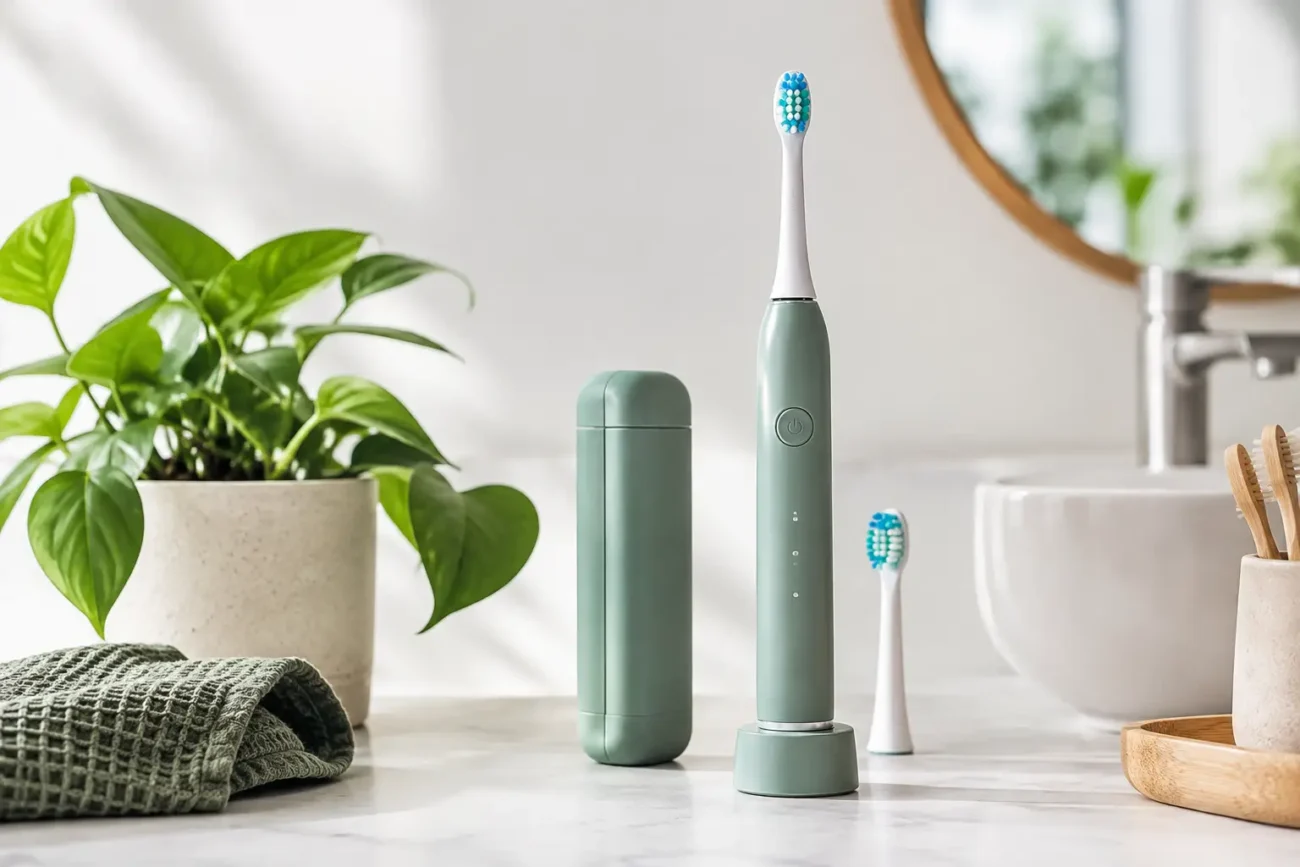
For people choosing a rechargeable bamboo electric toothbrush, this is also a practical everyday swap. You get the convenience of powered cleaning in a refined, natural-looking bathroom essential, without relying on a fully disposable plastic handle. Good brushing is not about scrubbing harder. It is about building a routine you will want to keep.
Start with the right brush head and toothpaste
Choose a soft-bristled brush head that feels comfortable along the gumline. Soft bristles can clean effectively when used with the correct technique, while firm bristles and excessive force may irritate gums or contribute to wear over time. A compact head is often especially useful because it can reach the back teeth and the inner surfaces more easily.
Apply a pea-sized amount of fluoride toothpaste to the bristles. You do not need to soak the brush head first, although a quick rinse is fine if you prefer it. Too much water or toothpaste can create lots of foam, making it tempting to finish early before the full brushing cycle is complete.
If you use a rechargeable brush with several modes, begin with the standard daily clean setting. Sensitive modes can be a comfortable choice for tender gums, after dental treatment or whenever the regular setting feels too intense. The best setting is the one that lets you brush thoroughly and consistently without discomfort.
How to use an electric toothbrush properly
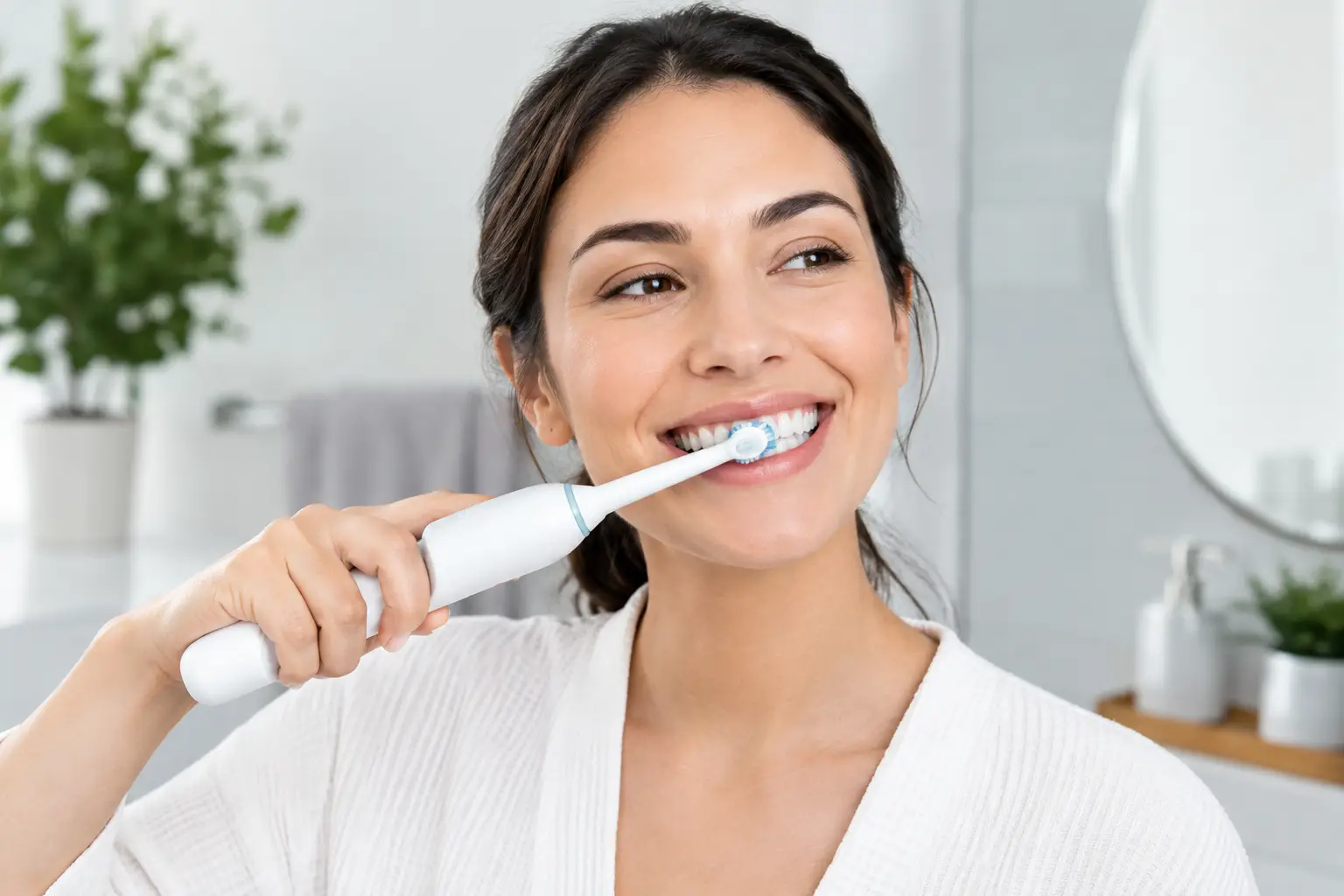
Place the brush head against your teeth before switching it on. This simple habit helps prevent toothpaste splatter and lets you start with control. Hold the bristles at roughly a 45-degree angle where the teeth meet the gums, rather than pressing the head flat against the tooth surface.
Once the brush is on, guide it slowly from tooth to tooth. There is no need for the fast back-and-forth motion used with a manual brush. Electric brush heads are designed to oscillate, rotate or vibrate for you. Your role is to position the bristles carefully and give them time to clean.
Spend a few seconds on each tooth surface: the outside facing your cheeks, the inside facing your tongue or palate, and the chewing surfaces. Pause briefly on each section before moving on. This is particularly helpful around crowded teeth, fillings, the gumline and the very back molars, where plaque can be easier to miss.
Think of the motion as guiding rather than scrubbing. If the bristles splay dramatically, your gums feel sore, or the handle pushes heavily into your teeth, ease off. Many electric toothbrushes include a pressure alert, but you can still build good technique without one: hold the handle lightly, as if you were writing with a pen.
Divide your mouth into four sections
Most electric brushes have a two-minute timer, often with a brief pulse every 30 seconds. Use those signals to move around your mouth in four sections: upper outside, upper inside, lower outside and lower inside. Be sure to include chewing surfaces as you go, especially on molars.
This approach is simple, but it removes the guesswork. Instead of concentrating only on the front teeth you see in the mirror, you create a repeatable route that covers the whole mouth. A timer is not a guarantee of perfect brushing, but it is a useful nudge for busy mornings and tired evenings.
Clean gently along the gumline
Plaque tends to collect at the gumline, so this area deserves unhurried attention. Let the bristle tips sit where the gum meets the tooth, moving slowly across the arch. Avoid forcing the bristles underneath the gums. Gentle contact is enough for routine brushing.
If your gums bleed repeatedly, feel swollen or remain painful after you have switched to a lighter technique, book an appointment with your dentist or hygienist. A brush can support a healthy routine, but it cannot diagnose or treat gum disease.
Do not forget your tongue and the hard-to-reach places
After brushing your teeth, gently brush your tongue from back to front once or twice, or use a tongue cleaner if you have one. This can help freshen your mouth by removing some of the bacteria and debris that contribute to odour. Keep the pressure light, as the tongue is sensitive.
Pay extra attention to areas that often get rushed: behind the lower front teeth, the cheek-side of upper back teeth and around orthodontic wires, retainers or dental restorations. If you wear braces, a small interdental brush may be helpful alongside your electric toothbrush. It depends on your dental needs, so follow the advice of your dental professional.
Brushing cleans tooth surfaces, but it cannot fully clean between them. Use floss or interdental brushes once a day, ideally at a time you are least likely to skip. Some people prefer before brushing, others after. The more useful choice is the routine you can maintain.
Rinse, store and charge with care
When the two minutes are up, spit out excess toothpaste but avoid rinsing your mouth vigorously with water straight away. Leaving a thin layer of fluoride toothpaste on your teeth gives it longer to work. If you prefer to rinse, use only a small amount of water.
Rinse the brush head under running water, switch the handle off and allow it to air-dry upright. Avoid sealing a wet brush inside a travel case for long periods, as trapped moisture is not ideal. If several brushes share a bathroom, keep heads separate so they can dry properly.
Rechargeable electric toothbrushes are designed for regular use, not for being left forgotten in a drawer. Follow the charging guidance supplied with your model. Long battery life is convenient for daily routines and holidays, but a quick check before travelling avoids arriving with a flat handle. Keep the charger dry and away from the edge of the sink.
Replace the brush head before it looks worn out
A brush head usually needs replacing around every three months, or sooner if the bristles become frayed, faded or flattened. Replace it after an illness too, particularly if you have had a contagious infection. Fresh, straight bristles clean more effectively and feel gentler against gums.
A replacement-head routine is also a more considered option than throwing away an entire toothbrush every few months. With a rechargeable handle, you keep the component designed for long-term use and change only the part that needs renewing. That is a small shift, but daily products are where practical lower-waste choices add up.
For households, it can help to set a calendar reminder at the start of each season. This keeps replacement heads from becoming an afterthought and makes it easier for adults and teenagers to share a consistent routine.
Common electric toothbrush mistakes
The most common mistake is treating an electric toothbrush like a manual one. Vigorous scrubbing does not create a deeper clean and can make brushing feel harsh. Another is moving too quickly, especially through the back teeth, where the brush needs a moment to work around each surface.
People also sometimes switch off the brush before they have completed the full two minutes, often because foamy toothpaste feels messy. Use less toothpaste and keep your lips loosely closed around the brush head to reduce splashing. Finally, do not use a worn brush head simply because it still fits the handle. Fit and cleaning performance are not the same thing.
A good electric toothbrush routine should feel calm, comfortable and easy to repeat. Give every area of your mouth the same measured attention, use soft bristles with a light hand, and let your brush’s timer set the pace. That is the kind of small daily care that keeps your smile feeling fresh and your bathroom routine beautifully uncomplicated.
Add a review
Your email address will not be published. Required fields are marked *