
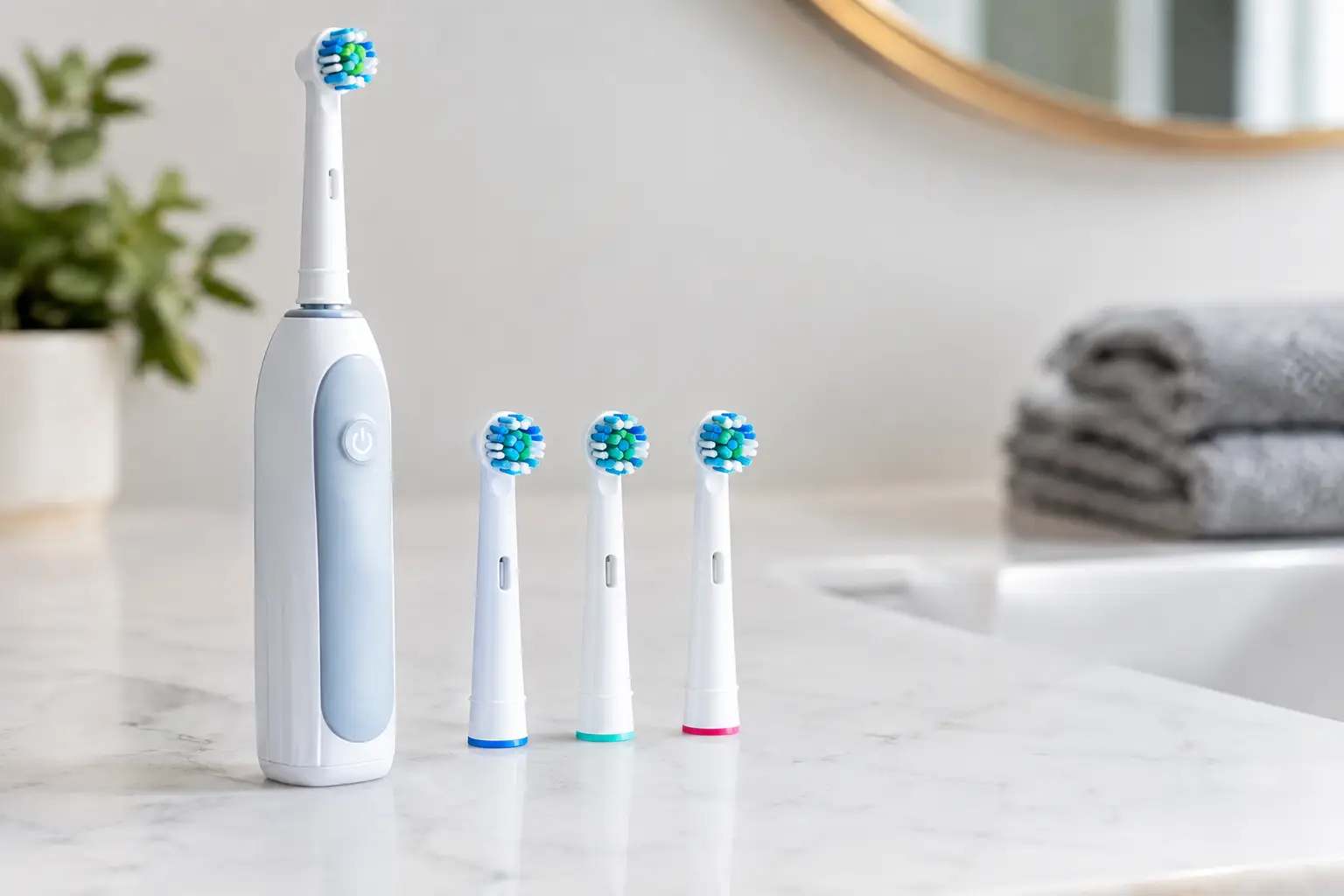
How Often to Replace an Electric Brush Head
A fresh brush head should feel quietly effective: soft on the gums, thorough around the gumline and comfortable enough to use twice a day. Searches for “how often replace electric brush head” usually have a straightforward answer, but the condition of the bristles matters just as much as the calendar. Replacing the head at the right time helps your rechargeable toothbrush deliver the clean it was designed for, without creating unnecessary waste.
How often to replace an electric brush head
For most people, replace an electric brush head every three months. This is the same interval widely recommended for manual toothbrushes, because bristles gradually lose their shape and cleaning ability with regular use.
A three-month schedule is a useful baseline, not a rule to follow blindly. If you brush gently for two minutes twice daily, your head may still look tidy at the end of that period, but the fine ends of the bristles will have softened through use. A fresh head gives you more consistent contact with tooth surfaces and along the gumline, where plaque tends to collect.
If your electric brush head has colour-fade reminder bristles, use them as a prompt rather than the only test. Fading can be helpful, but visible wear, changes in feel and illness are all reasons to replace sooner.
For a simple routine, choose a date you already remember. The first day of each new season, the start of a school term or the day you change your bed linen can all work. A replacement head kept in the bathroom cupboard means the switch takes seconds, rather than becoming another item on a to-do list.
Replace it sooner when the bristles show wear
Electric toothbrushes move thousands of times per minute, but their bristles are still delicate. The head can wear out before three months, particularly if you brush firmly, use a whitening toothpaste with more abrasive particles, or share your bathroom with a child who is still learning pressure control.
Look closely at the bristle tips in good light. A head is ready to change if the bristles flare outwards, bend to one side, look flattened or no longer form an even surface. Bristles that have splayed cannot sweep as neatly across teeth or sit as accurately at the gumline. They can also make brushing feel scratchy rather than comfortably polished.
Replace the head after an illness such as a cold, flu, sore throat or oral infection, especially if it has been stored close to other toothbrushes. This is not about making your bathroom sterile. It is a sensible reset when you are recovering and want to return to a clean routine.
You may also need an earlier replacement if the head develops an unusual smell, visible residue that does not rinse away, or a loose fit on the handle. Stop using a damaged head rather than trying to extend its life.
Why old brush heads clean less effectively
A worn head does not suddenly stop working on day 91. The change is gradual, which is why it is easy to miss. With time, bristle tips lose the spring needed to reach gently between teeth and around the contours of molars. The head may still feel as though it is moving powerfully, while the bristles doing the actual cleaning are less precise.
Replacing the head is not about chasing a perfectly white smile. It is about maintaining dependable everyday plaque removal while keeping brushing comfortable for your gums. Soft bristles are designed to flex, but once they become permanently bent, that flexibility no longer works in your favour.
Using a tired head for too long can also encourage unhelpful habits. When your mouth does not feel as clean, you may press harder or brush longer. Extra pressure is not the answer. A fresh, soft brush head paired with light pressure and a full two-minute brush is usually the more comfortable approach.
Make each electric brush head last well
Good care will not turn a three-month head into a six-month one, but it can help it perform properly for its intended lifespan. Rinse the bristles thoroughly after every brush, removing toothpaste and loosened debris. Then store the toothbrush upright where air can circulate around the head.
Avoid placing a travel cap over a wet brush head for everyday storage. Caps are useful for keeping a brush protected while travelling, but trapping moisture around wet bristles for days can leave the head stale. Let it dry first whenever possible.
Use light pressure. Many electric toothbrush users make the switch from manual brushing and instinctively scrub. Instead, guide the brush slowly from tooth to tooth and allow the movement of the head to do the work. If your handle has a pressure alert, treat it as useful feedback, not a feature to ignore.
Keep the handle and connection point clean, too. Removing the head periodically and wiping away toothpaste residue with a damp cloth helps it attach securely. Do not pull at individual bristles, boil the head or use harsh cleaning chemicals. These shortcuts can damage the materials without making the head cleaner.
A lower-waste way to stay on schedule
Replacing a brush head regularly can feel at odds with a lower-waste bathroom, but keeping a worn head for too long is not the more sustainable choice if it leads to poorer brushing or an earlier replacement of the whole device. The practical goal is to use each head fully, then replace only the part that needs replacing.
A rechargeable electric toothbrush already helps reduce the number of complete toothbrushes discarded over time because you retain the handle and battery system. Choosing compatible replacement heads keeps that useful part of your routine in service. MAXDENT pairs the familiar convenience of an electric brush with a natural bamboo look that sits neatly on a minimalist bathroom counter.
When a used head reaches the end of its life, check your local recycling guidance before disposing of it. Brush heads often contain mixed materials, so they should not be assumed to be home-compostable or accepted in every household recycling collection. Removing uncertainty is better than making a hopeful guess.
Buying replacements in a sensible multipack can also reduce last-minute purchases and excess delivery packaging. Only stock what you are likely to use within a year, and keep unopened heads dry and clean in a cupboard.
Choosing the right replacement head
Compatibility comes first. An electric brush head must be designed to fit your specific handle securely; a head that seems close enough may wobble, clean inconsistently or detach during use. Check the product description and fitting style before ordering rather than relying on a similar-looking connector.
For most adults and teenagers, soft bristles are the best everyday choice. They are gentle on gums while still providing an effective clean when used with the right technique. A compact head can be particularly helpful for reaching behind the back teeth, while a fuller head may suit someone who prefers broader surface coverage. The best option is the one that feels comfortable enough to use consistently.
Common questions about replacement brush heads
Can I use an electric brush head for longer if it still looks new?
It may look fine, but replace it at around three months. Bristle wear is not always obvious at first glance, and regular replacement keeps performance more predictable. Change it earlier if the bristles bend, spread or feel rough.
Should children replace electric brush heads more often?
Possibly. Children and teenagers can be harder on bristles, particularly while they are developing a gentle brushing technique. Check the head every few weeks and replace it as soon as it flares or loses its shape, even if three months have not passed.
Is a hard brush head better for deep cleaning?
Usually, no. Harder bristles are not automatically more effective and can feel uncomfortable on gums. Thorough cleaning comes from gentle, consistent technique, enough brushing time and a fresh head with well-aligned bristles.
A replacement head is a small part of your routine, yet it changes how your clean feels every morning and night. Put the next change in your calendar now, keep a spare ready, and let your toothbrush stay as gentle, polished and dependable as the rest of your bathroom routine.



Add a review
Your email address will not be published. Required fields are marked *