
How to Dispose of Toothbrush Bristles Responsibly
A toothbrush may look small, but its end-of-life details matter. If you are wondering how to dispose of toothbrush bristles, the honest answer is that it depends on what the bristles are made from, whether they are still attached to the brush head, and what your local council accepts. A few careful minutes can keep a bamboo handle out of general waste and make your lower-waste routine feel genuinely practical.
Why toothbrush bristles need separate treatment
Most toothbrush bristles are made from nylon or another plastic-based fibre. They are chosen because they are durable, flexible and gentle enough for daily brushing, particularly when the tips are soft. That performance comes with a trade-off: unlike a natural bamboo handle, conventional bristles do not break down in a home compost bin.
Bristles are also tiny. Loose fibres can be difficult for recycling facilities to sort and can escape into the environment if they are rinsed down the sink or swept outside. The best approach is simple: collect them carefully, contain them, and follow the waste or recycling route available where you live.
This does not mean an eco-conscious toothbrush is pointless. Choosing a bamboo handle can significantly reduce the amount of plastic in a toothbrush. The goal is not perfection. It is making the most considered choice at each stage, from brushing to disposal.
How to dispose of toothbrush bristles from a bamboo brush
When your manual bamboo toothbrush has reached the end of its useful life, remove the bristles before composting or disposing of the handle. Replace your toothbrush, or brush head, roughly every three months, or sooner if the bristles become splayed, worn or uncomfortable.
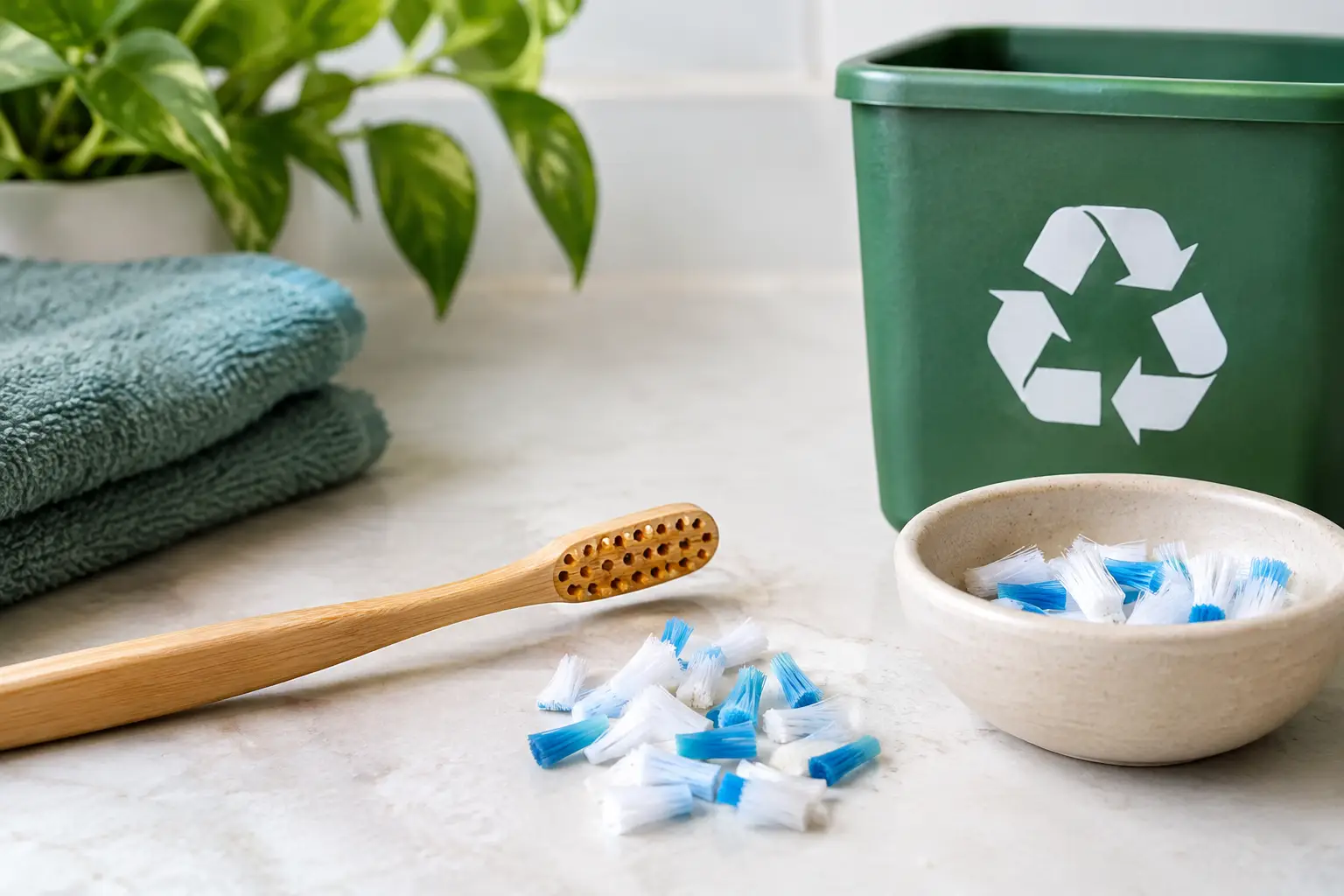
Start by placing the dry brush head over a bin, bowl or sheet of paper. Use small pliers to grip a compact section of bristles and pull upwards. Work slowly from one side of the head to the other. A household key, tweezers or a small flat tool can help lift stubborn tufts, but take care not to injure your hand.
Keep the removed bristles together rather than allowing them to scatter. Put them in the residual waste bin unless your council or a specialist collection programme specifically accepts toothbrush components. In many areas, loose nylon bristles cannot go into kerbside recycling because they are too small and are made from a material stream that differs from common household plastics.
Once the bristles are out, check the bamboo head for any remaining metal staples. Some bamboo toothbrushes use tiny metal anchors to hold bristle tufts in place. Remove these where possible and place them with appropriate metal recycling only if your local service accepts small metal items. If they cannot be removed safely, put that small section in general waste rather than forcing the material into the wrong bin.
The cleaned bamboo handle can then usually go into a home compost heap or garden-waste collection, depending on local guidance. Breaking it into smaller pieces may help it decompose more quickly. If your compost system runs cool or you want a simpler option, a clean handle can also be reused as a plant label, a cleaning tool for awkward corners, or a craft material before it reaches its final destination.
Do not compost bristles with the handle
Putting the entire brush into compost is tempting, especially when the handle is bamboo. But the bristles will remain behind as plastic fragments after the handle has decomposed. Removing them first is the small step that makes the bigger sustainable choice work as intended.
What to do with electric toothbrush bristles and brush heads
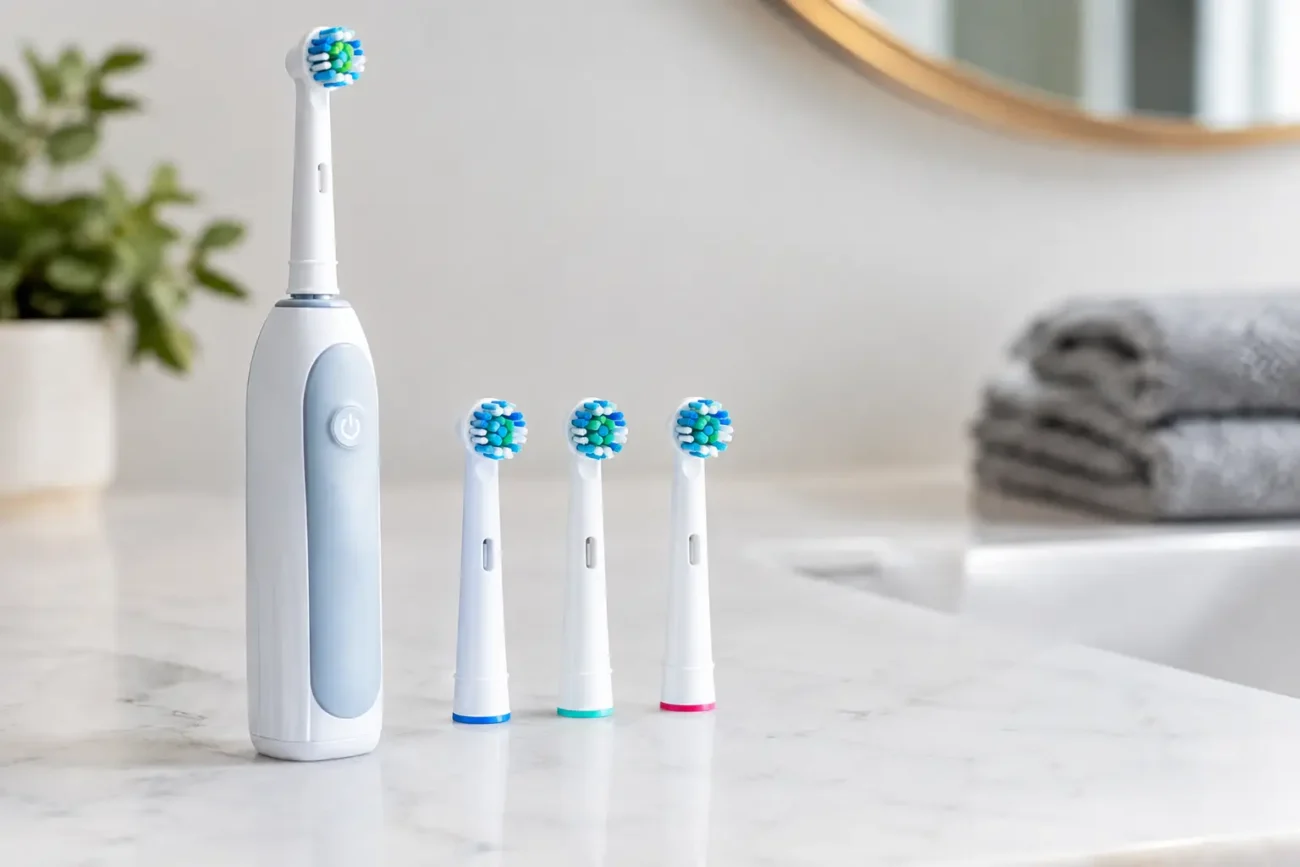
Rechargeable toothbrushes reduce waste differently. Instead of replacing a whole handle every few months, you keep the rechargeable base and change only the brush head. That is a practical, long-term upgrade for anyone who wants effective cleaning without repeatedly buying a complete plastic device.
A replacement electric brush head is usually made from mixed materials: plastic casing, nylon bristles and sometimes internal metal components. Because these pieces are bonded together, they are rarely suitable for standard household recycling. Do not put them in the mixed recycling bin unless your council clearly says it accepts oral-care products.
The most reliable option is to check whether your local authority, supermarket collection point or specialist oral-care recycling scheme accepts used brush heads. These services vary by area and can change, so local instructions should always take priority. If no suitable scheme is available, place the complete used brush head in general waste. It is not the ideal outcome, but it is better than contaminating recycling that cannot process it.
Never put an electric toothbrush handle, charging cable or battery in the household bin. Electrical items and rechargeable batteries need dedicated collection. Many retailers and recycling centres accept small electricals, and some battery points take removable batteries separately. Keeping these parts out of landfill helps recover valuable materials and lowers the risk of battery-related fires in waste vehicles and sorting facilities.
A cleaner way to collect loose bristles
The easiest way to lose bristles is during removal. Work over a container with high sides, then tip everything into a small paper packet or an empty jar before placing it in the bin. Avoid flushing bristles down the toilet or rinsing them into the basin. Wastewater systems are not designed to capture every tiny plastic fibre.
If you change several bamboo toothbrushes at once for a household, label a small container for used bristles and staples. Dispose of the contents together when it is full. This is especially handy for families who buy multipacks and like to refresh brushes at the same time.
Do not burn toothbrush bristles or brush heads. Burning plastic at home can release harmful fumes, and it is not a safe disposal method. The same rule applies to compostable packaging with plastic coatings: when in doubt, follow the instructions printed on the item and the guidance from your local council.
Choosing a toothbrush with disposal in mind
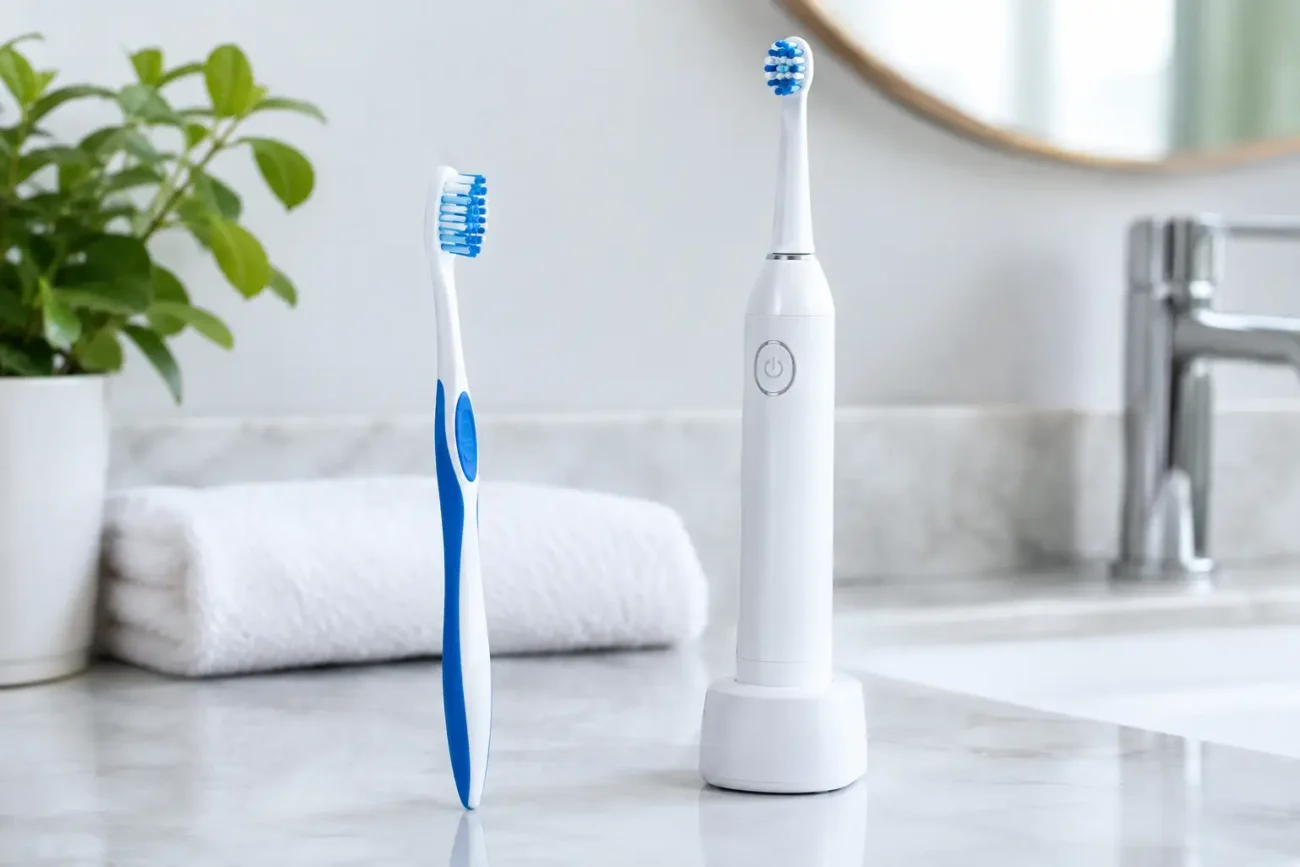
End-of-life disposal is easier when the toothbrush has been designed to reduce unnecessary material from the start. A bamboo manual brush separates a natural handle from synthetic bristles, while a rechargeable electric toothbrush keeps its main handle in use for far longer than a disposable battery-powered model.
For daily comfort, there is no need to compromise on soft bristles or reliable cleaning. The useful question is not whether every component can disappear into compost, but whether the brush reduces throwaway material while still supporting a brushing routine you will enjoy sticking with. A toothbrush that feels good in the hand and looks at home on your bathroom counter is more likely to become part of that routine.
MAXDENT bamboo toothbrushes and rechargeable bamboo electric toothbrushes are designed around that balance: natural-looking materials, gentle bristle options and long-term everyday usability. When it is time to replace a brush or head, separating the components where possible helps extend the benefit of that choice.
Common disposal questions
Can toothbrush bristles be recycled?
Sometimes, but usually not through ordinary kerbside recycling. Bristles are small and commonly made from nylon, so they need a specialist scheme that explicitly accepts oral-care waste. Check local options before placing them in a recycling bin.
Are charcoal-infused toothbrush bristles compostable?
Charcoal infusion does not automatically make a bristle compostable. The base fibre still determines how it should be disposed of. Unless the product packaging clearly confirms certified compostability, treat removed bristles as general waste or use an appropriate specialist recycling route.
Can I leave bristles in a bamboo toothbrush for garden waste?
No. Remove the bristles and any staples first. Garden-waste systems are intended for materials that can break down safely, and plastic bristles can contaminate the finished compost.
What if I cannot remove all the bristles?
Do not struggle with sharp tools. Remove as many as you safely can, then put the remaining brush head or whole toothbrush in general waste. A safer choice is always better than an imperfect attempt at separation.
A thoughtfully chosen toothbrush makes a visible difference to your daily routine, but its final few minutes matter too. Keep a pair of pliers near your recycling area, check your local guidance when it changes, and let every replacement be a simple reminder that lower-waste habits are built one useful decision at a time.


Add a review
Your email address will not be published. Required fields are marked *