
Are Electric Toothbrushes Waterproof? Bathroom Guide
A toothbrush lives beside the tap, so it is reasonable to ask: are electric toothbrushes waterproof? Most are designed to handle normal brushing, rinsing and splashes. That does not automatically mean every part can be submerged for long periods, placed in a full sink or used carelessly in the shower.
The useful distinction is simple. A well-made electric toothbrush should make everyday brushing feel easy, clean and low-fuss. Treating it like a fully sealed bath toy, however, can shorten its life. With a few good habits, you can protect the battery, keep the handle looking fresh and enjoy reliable cleaning every day.
Are electric toothbrushes waterproof or water-resistant?
The terms sound similar, but they describe different levels of protection. Water-resistant means a product can resist a limited amount of water, such as splashes from the basin or a quick rinse. Waterproof suggests stronger protection against water entering the device, often up to a stated depth or time.
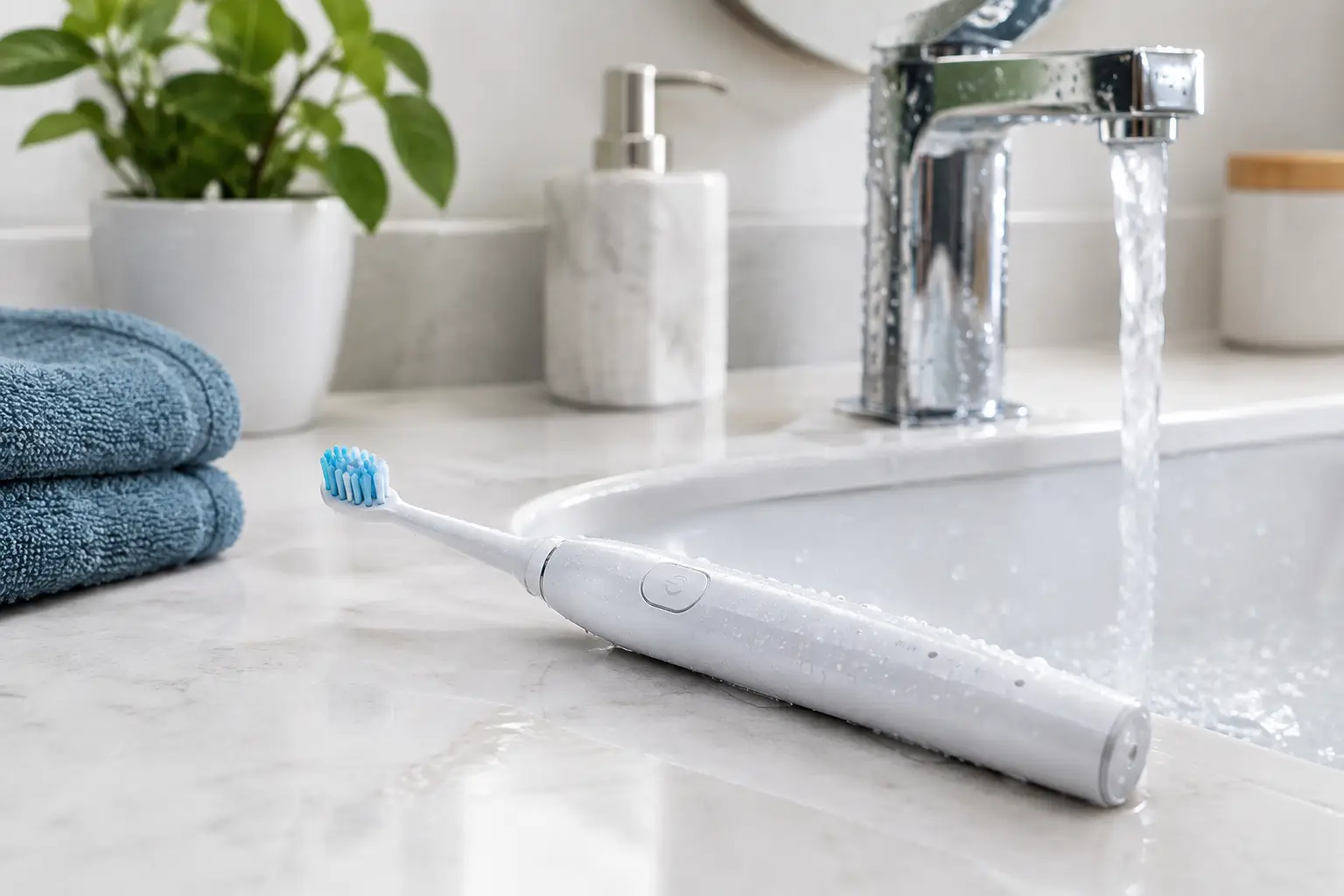
Many electric toothbrushes have sealed handles because they are intended for a wet bathroom environment. The brush head and handle can usually be rinsed after use, while the charging base is generally the part that needs the most care. It contains electrical contacts and should be kept dry unless the manufacturer specifically says otherwise.
The safest answer is always found in the product instructions. Look for an IP rating if one is provided. This is a protection code used to indicate how well an electrical item resists dust and water. The second number relates to water protection: a higher number usually means greater resistance. An IPX7-rated handle, for example, is commonly designed to tolerate temporary immersion, but that does not make every accessory or charger equally protected.
For a rechargeable bamboo electric toothbrush, the same common-sense approach applies. Natural-looking materials bring warmth and style to your bathroom counter, while the internal electronics still need sensible care. A quick rinse is part of a clean routine. Leaving any electric handle soaking in water is not.
What everyday water exposure is usually safe?
Normal brushing creates plenty of moisture. Toothpaste foam runs down the handle, water sprays from the tap, and a rinse helps remove residue around the brush head. These are the conditions an electric toothbrush is made to manage.
After brushing, rinse the brush head under lukewarm running water. If the handle has toothpaste marks, wipe it with a damp cloth or give it a brief rinse only where the instructions permit. Then dry the handle and stand it upright in a clean, ventilated place.
A little water inside the brush-head connection area can happen during use. Remove the head regularly, rinse both parts gently and dry them before reattaching. This simple step prevents toothpaste build-up and lets the connection stay hygienic.
Hot water deserves more caution. Very hot water can affect bristles, seals and surface finishes over time, so lukewarm water is the better choice. It is kinder to soft bristles too, helping them stay comfortable on gums and effective along the gumline.
Can you use an electric toothbrush in the shower?
It depends on the model, its water rating and the manufacturer’s guidance. A sealed toothbrush handle may cope with shower humidity and occasional splashes, but a shower is a harsher environment than the basin. There is continuous water exposure, steam and a greater chance of dropping the brush.
More importantly, charging equipment and shower areas should never mix. Do not charge your toothbrush near a shower, bath or wet basin. Keep the charger on a dry, stable surface away from standing water, and only place the handle on it when both are dry.
For most people, brushing at the sink is the simplest option. You have better visibility, can rinse thoroughly and can store the brush upright afterwards. It also avoids the habit of leaving a damp device trapped in a steamy shower caddy.
How to clean an electric toothbrush without damaging it
Good cleaning is less about scrubbing harder and more about cleaning the right parts regularly. Your brush does not need complicated maintenance, but it does benefit from a routine.
Rinse the brush head after every use and shake off excess water. Once a week, take the head off and rinse around the metal drive shaft and the inside of the head. Wipe the handle with a soft, damp cloth, then dry it. If toothpaste has dried around seams or buttons, use a soft cloth rather than sharp tools that could damage the surface.
Avoid harsh household cleaners, bleach, abrasive powders and solvents. These can dull the finish, weaken seals or leave residue where your mouth comes into contact with the brush. A mild clean with water is generally enough for the handle, while following the product care instructions remains the best rule.
Do not put an electric toothbrush handle in a dishwasher or microwave, even if it seems like a quick way to sanitise it. High heat and prolonged water exposure are not suitable for battery-powered devices. Replace the brush head when the bristles become splayed, faded or less comfortable, typically around every three months depending on use.
Charging safely in a wet room
Charging is where a little caution makes the biggest difference. The handle may be designed for water exposure, but the charger is an electrical appliance first. Place it well away from the edge of the sink, and never handle the plug or cable with wet hands.
Before charging, check that the bottom of the handle and the charging base are dry. A quick wipe takes seconds and helps prevent moisture sitting around the contact point. If you travel with your toothbrush, pack it only after it has dried fully. A closed travel case can trap moisture, which is not ideal for either the brush head or handle.
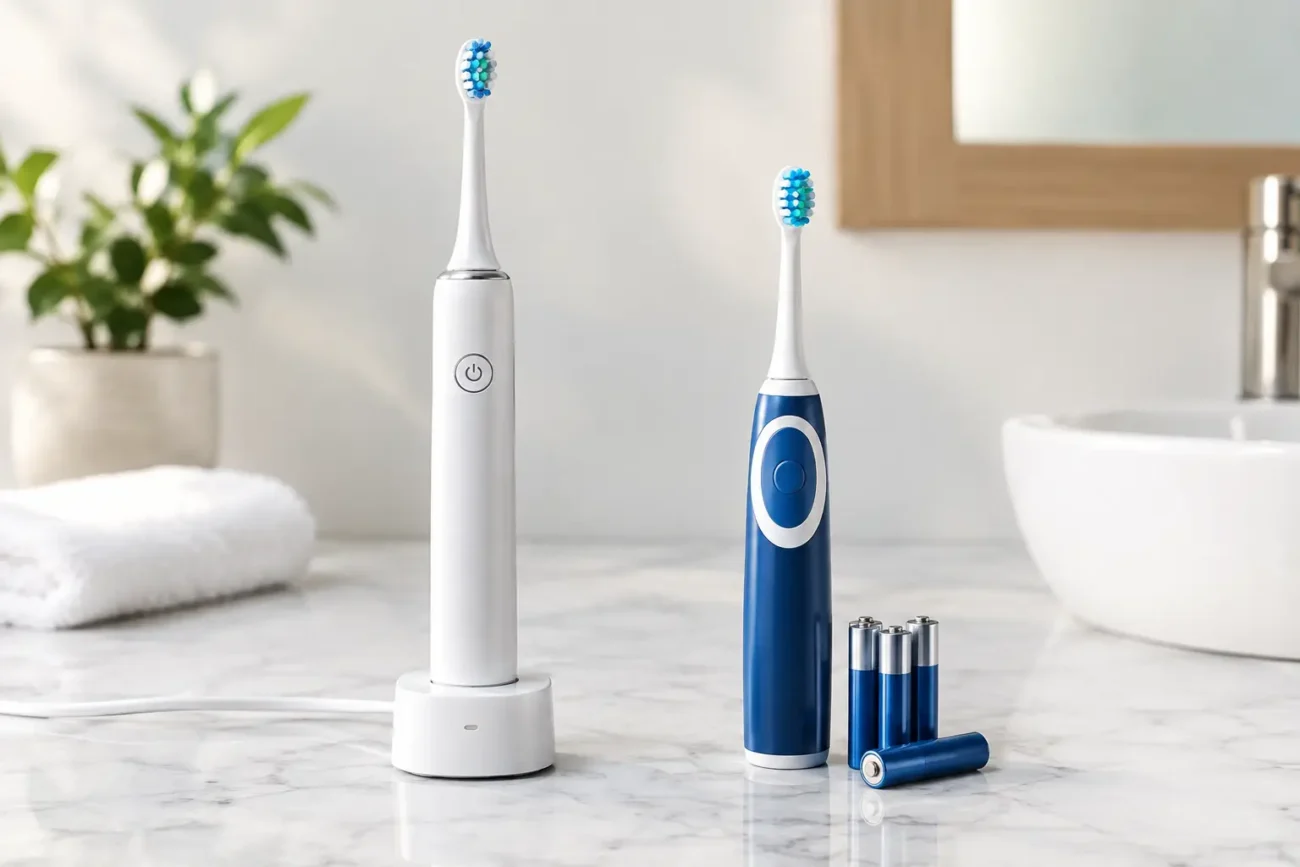
If the charging cable looks frayed, the base becomes unusually warm, or the handle has cracks around its casing, stop using it until it has been checked or replaced. A long-lasting rechargeable brush is a practical way to reduce disposable battery waste, but only when its charging components are kept in good condition.
Signs your toothbrush may have water damage
A toothbrush that has survived a splash is unlikely to need attention. Water damage tends to show up as a change in performance. Watch for charging that becomes unreliable, unexpected switching on or off, a weaker vibration, a persistent rattling sound, visible condensation under a display or unexplained heat during charging.
First, stop charging the device and dry the outside thoroughly. Remove the brush head and allow the handle to air-dry upright in a dry room. Do not try to dry it with a radiator, hairdryer or microwave, as intense heat can cause further damage. If the problem continues, follow the manufacturer’s support guidance rather than opening the handle yourself.
It is also worth separating water damage from ordinary maintenance needs. A loose or worn brush head can cause extra noise, while residue around the connection point can affect how securely it fits. Cleaning and replacing the head may solve the issue without any concern about the internal motor.
A bathroom setup that protects your brush
Where you keep your toothbrush matters almost as much as how you rinse it. Stand it upright so water can drain away from the head. Give it open air rather than sealing it in a cover straight after brushing. If several brushes share a holder, leave enough space between them for heads to dry.
Keep the charger in a dry zone and avoid trailing cables across the basin area. For a calmer, more considered bathroom setup, a compact rechargeable brush with a natural bamboo finish can sit neatly on the counter without adding another bulky piece of plastic. At MAXDENT, that balance of everyday performance and lower-waste design is central: soft bristles, rechargeable convenience and a brush you will be happy to leave on show.
A toothbrush is a small part of your day, but it is used twice daily and exposed to water every time. Rinse it, dry it, charge it safely and let it air between uses. Those quiet habits help your electric toothbrush stay clean, dependable and ready for the next smile.
Add a review
Your email address will not be published. Required fields are marked *