
Choosing a Vegan Toothbrush Without Plastic
A toothbrush is one of the few things you use twice a day, every day, yet most are designed to be thrown away after a few months. Choosing a vegan toothbrush without plastic can make that routine feel considered rather than disposable – especially when the brush still feels comfortable in your hand and leaves your mouth genuinely clean.
The key is knowing what the claim means. A bamboo handle is a meaningful move away from conventional plastic, but a truly low-plastic brush also requires a closer look at its bristles, packaging and end-of-life instructions. The best option is not necessarily the one with the loudest eco message. It is the one you will enjoy using consistently, replace on time and dispose of as responsibly as possible.
What does a vegan toothbrush without plastic mean?
Vegan refers to materials that do not come from animals. It rules out natural animal-hair bristles, for example. Plastic-free refers to the materials used throughout the brush, including the handle, bristles, binding and packaging. These are related claims, but they are not interchangeable.
Many bamboo toothbrushes are vegan because they use synthetic bristles rather than animal hair. Those bristles may still be nylon or another polymer, however, which means the toothbrush has reduced plastic rather than eliminated it completely. This does not make bamboo brushes a poor choice. It simply means clear labelling matters.
A plastic-free vegan toothbrush may use plant-based bristles, biodegradable materials or a design that separates the brush head from the handle. Availability and durability vary, so it is worth weighing the whole product rather than expecting one material to solve every waste issue.
For most households, the most practical next step is choosing a toothbrush with a natural, durable handle, animal-free bristles, minimal packaging and sensible disposal guidance. That reduces the amount of fossil-fuel plastic entering your bathroom while keeping your oral-care routine realistic.
Why bamboo makes sense for everyday brushing
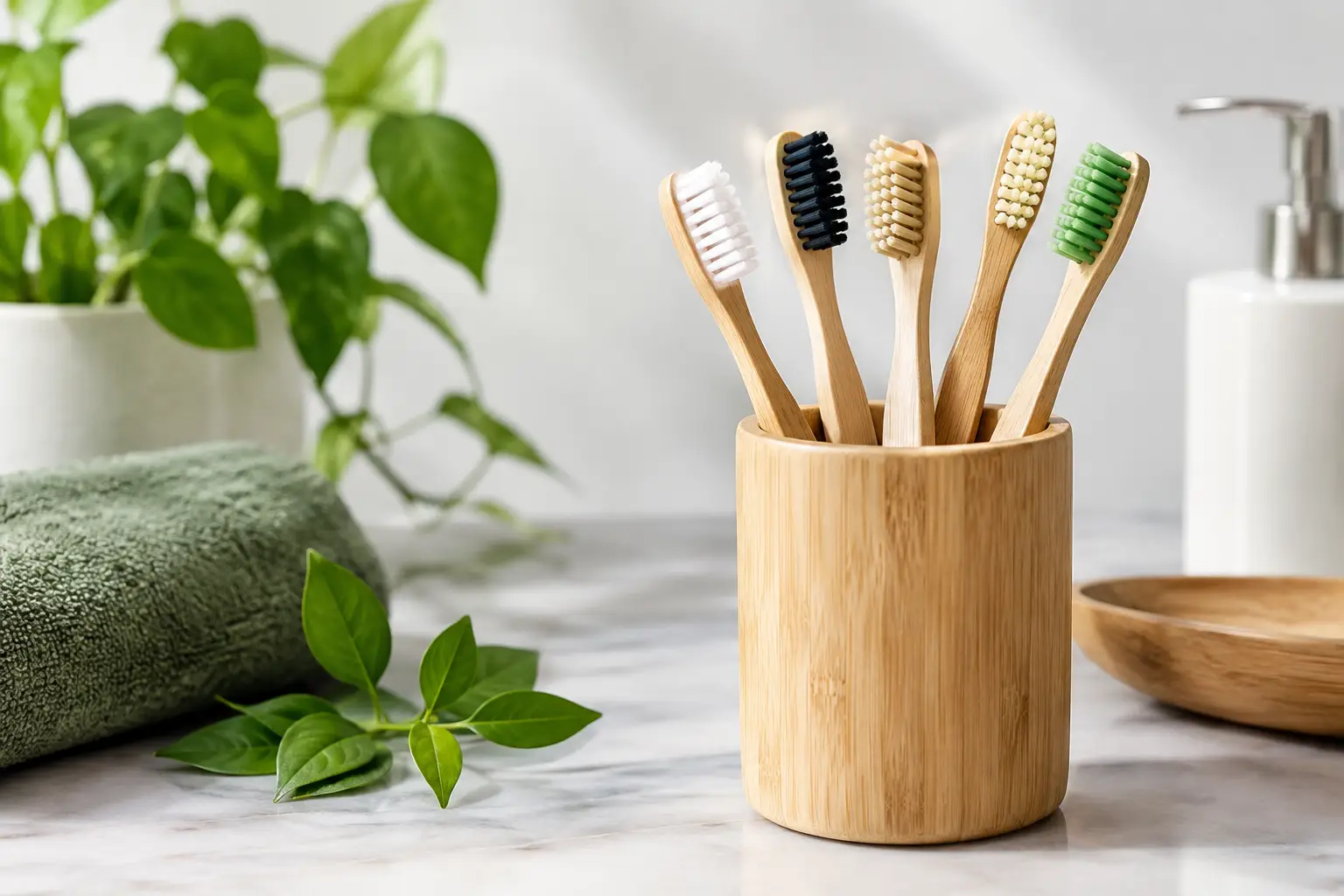
Bamboo has an immediate visual advantage: it replaces the glossy, moulded look of a disposable plastic handle with a warm, natural finish that suits a calm, uncluttered bathroom. More importantly, it is a rapidly renewable material and can reduce reliance on virgin plastic in a product that is replaced regularly.
It also feels different to hold. A well-finished bamboo handle is lightweight but not flimsy, with a comfortable grip that works for adults and teenagers alike. The design can be simple without looking basic. For design-conscious homes, that matters. A toothbrush sits in plain view every morning and evening.
There are trade-offs. Bamboo needs to be dried between uses. Leaving any wooden handle submerged in water can shorten its life and may lead to surface wear. Keep it upright in an open holder, allow air to circulate and avoid storing it in a sealed travel case while damp. With that small habit, bamboo is straightforward to live with.
Bristles still decide how the brush performs
A sustainable handle should never ask you to compromise on gum comfort or cleaning quality. Bristles do most of the work, so choose them with the same care you would give to any conventional toothbrush.
Soft bristles are usually the right starting point. They can clean effectively along the gumline when used with gentle pressure, while helping avoid the harsh scrubbing that can irritate gums and wear down enamel. Firm bristles can feel satisfying, but harder is not automatically cleaner. Technique, brushing time and regular replacement matter more.
Charcoal-infused bristles are a popular choice for shoppers who like a modern, darker look alongside a natural bamboo handle. They can be part of a refined daily routine, but they are not a substitute for fluoride toothpaste, careful brushing or professional dental advice. Look for bristles that feel smooth at the tips and are securely anchored in the brush head.
If avoiding all plastic is your priority, check exactly what the bristles are made from before buying. Terms such as “eco”, “natural” and “biodegradable” are not material specifications. A brand should be able to explain whether the bristles are conventional nylon, plant-derived or another material, and how they should be disposed of.
A cleaner bathroom routine starts with better storage
The easiest way to extend the life of a bamboo toothbrush is to rinse it thoroughly after brushing, shake off excess water and store it bristle-side up. Do not press the head against another toothbrush where moisture can linger. A ventilated holder is better than a closed cup.
Replace your brush about every three months, or sooner if the bristles splay, flatten or feel rough. After an illness, replacing it is also a sensible precaution. Keeping a multipack on hand means you are less likely to continue using an overdue brush simply because there is no spare in the bathroom cabinet.
Manual or electric: which lower-waste choice fits?
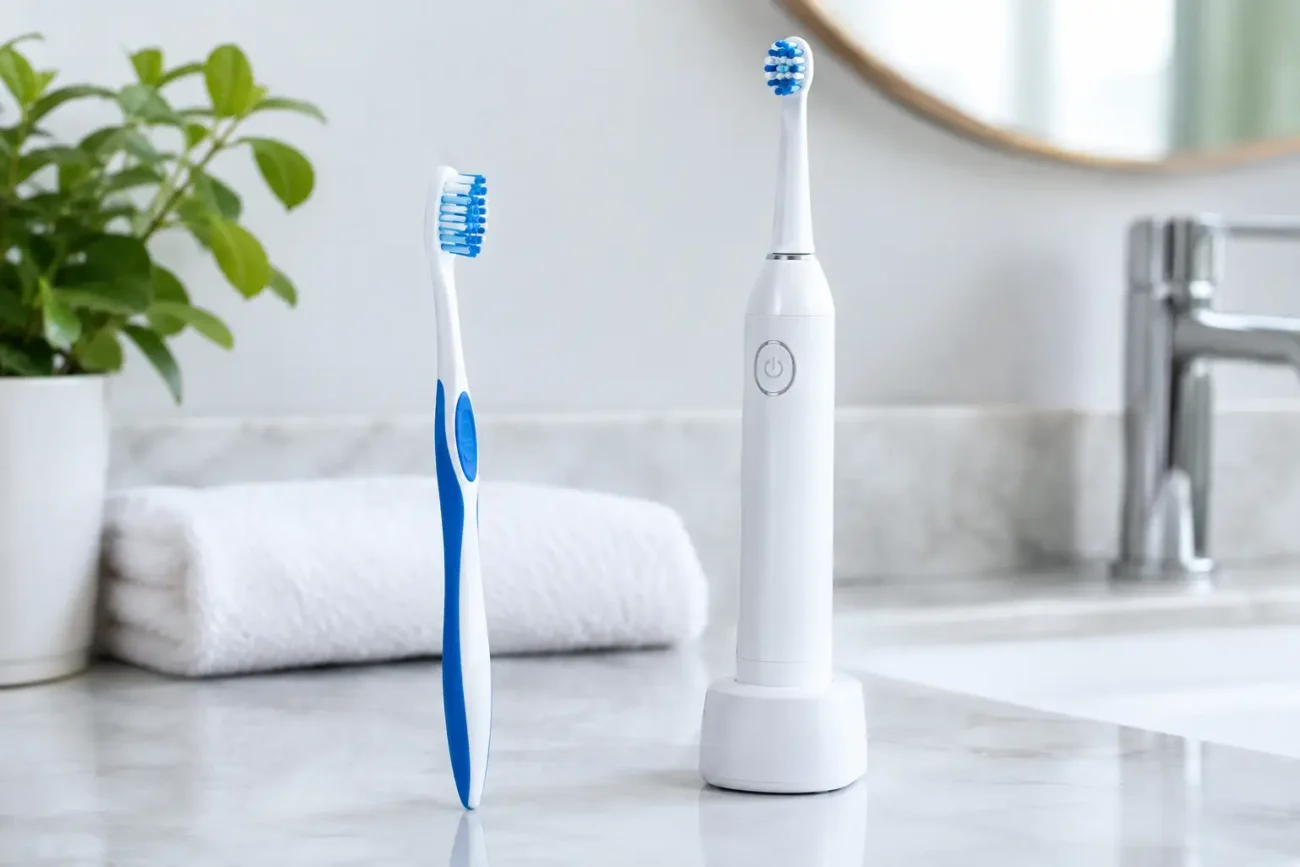
A manual bamboo toothbrush is the simplest option for someone reducing plastic in one clear step. It is light, travel-friendly and easy to understand: one handle, one brush head and far less plastic than a standard disposable brush. It is particularly suited to people who are happy with a manual brushing routine and want a stylish, natural-looking alternative on the basin.
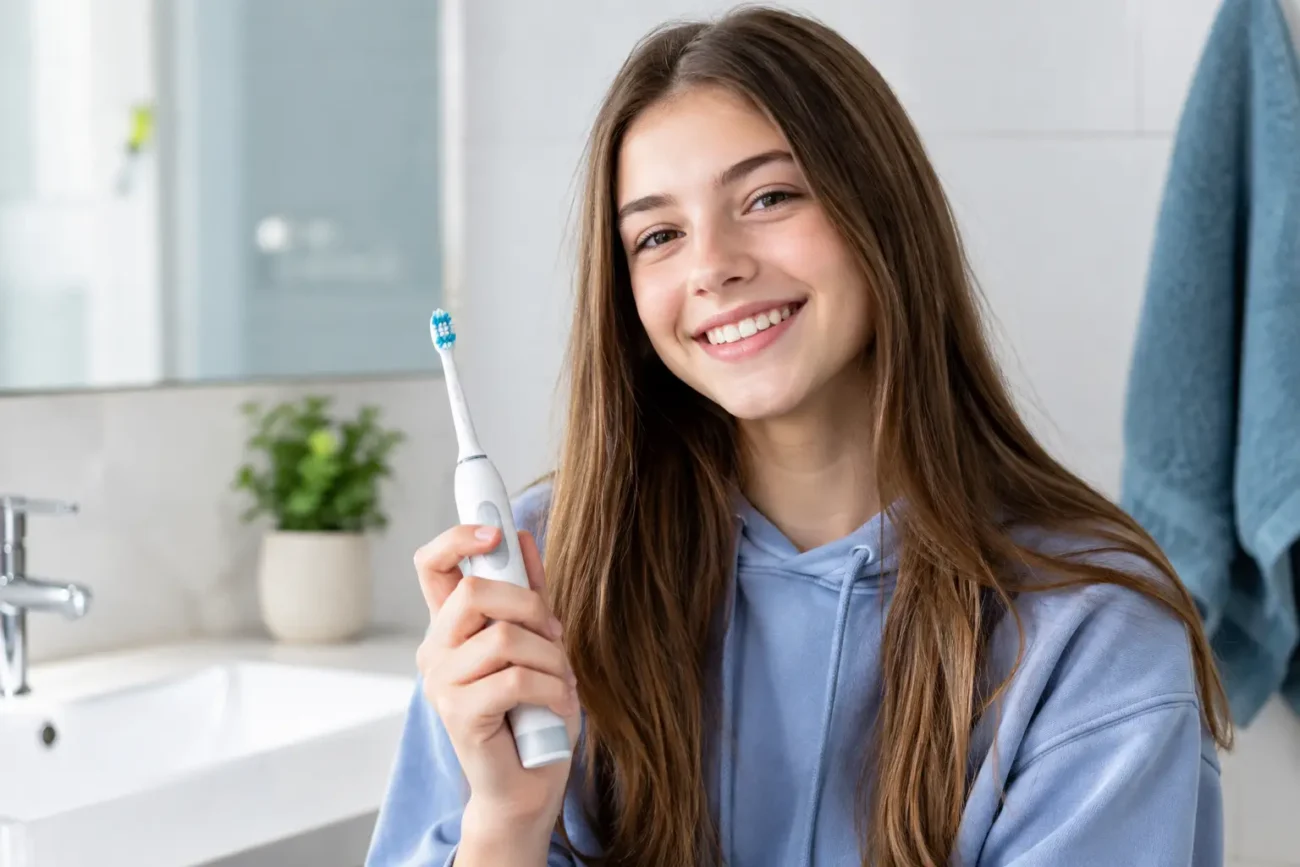
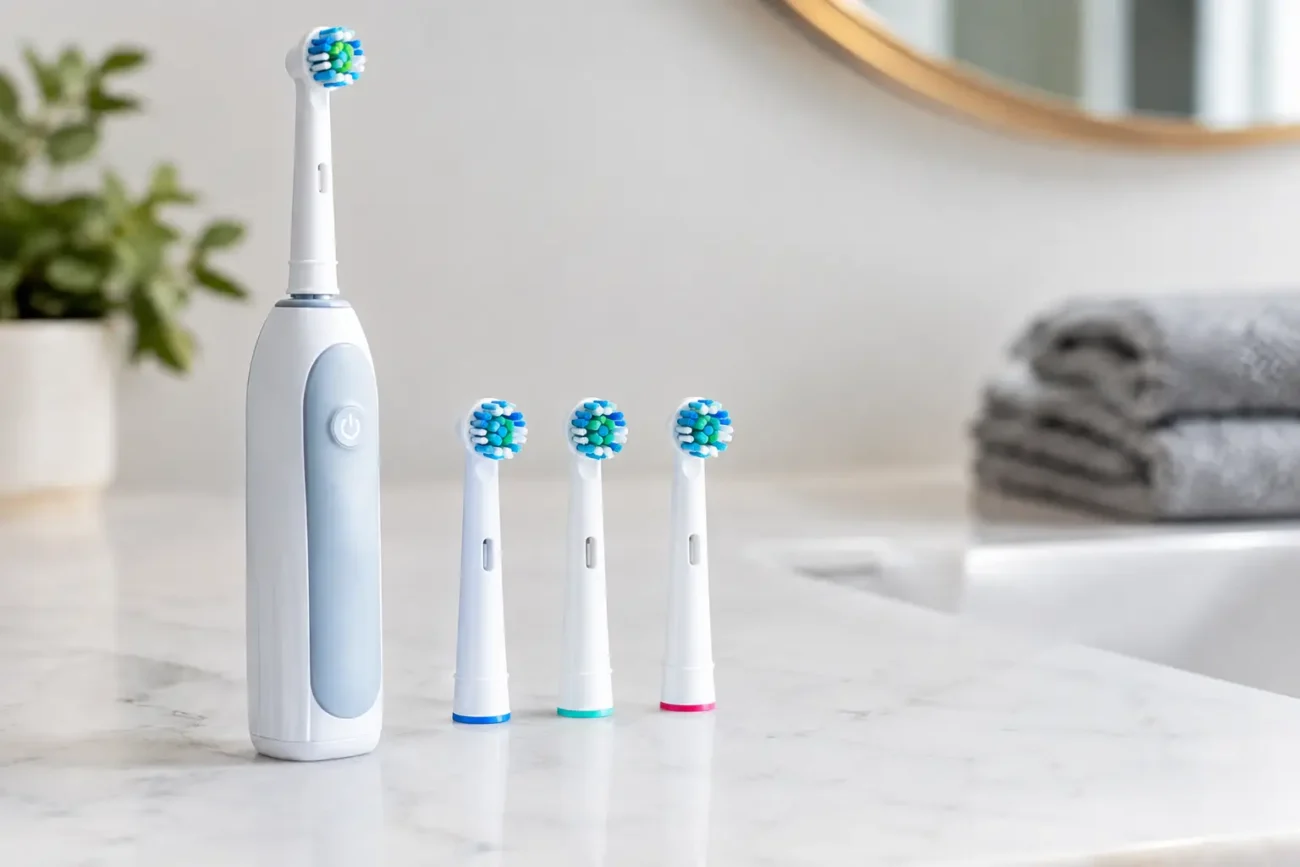
An electric toothbrush can be the better long-term fit for people who benefit from timed brushing, multiple cleaning modes or a more consistent motion. The sustainability question changes here. Rather than replacing a whole device every few months, you keep a rechargeable handle and replace only the brush head. That can reduce waste over time, provided the handle is made to last and replacement heads are readily available.
The handle will contain electronic components and cannot be treated like a compostable bamboo item. It needs responsible e-waste recycling at the end of its usable life. But it can still be a thoughtful choice when it replaces years of disposable battery-powered brushes or frequently discarded plastic handles.
This is where practical design matters. A rechargeable electric brush should offer dependable battery life, a compact shape and soft replacement heads that are easy to fit. Less charging hassle makes it more likely that the brush becomes part of your actual routine, not another well-meant purchase left in a drawer.
MAXDENT ECOSHOP brings that balance into focus with bamboo manual brushes and rechargeable bamboo electric options designed for effective, comfortable daily use. The aim is not perfection theatre. It is making a lower-plastic oral-care routine feel polished, dependable and easy to maintain.
How to check a toothbrush before you buy
Product images can make many brushes look greener than they are, so take a moment to read beyond the front label. Material details are more useful than broad claims. A good product description should make it clear what the handle, bristles and packaging are made from, rather than leaving you to guess.
Ask whether the handle is bamboo or a bamboo-effect plastic composite. Check whether the bristles are vegan, and whether they contain plastic. Look for packaging that avoids unnecessary sleeves, blister packs and oversized boxes. If you are choosing an electric model, make sure replacement heads are available before committing to the handle.
It also helps to look at the expected lifespan. A toothbrush that looks beautifully minimal but sheds bristles quickly or feels uncomfortable is not a more sustainable purchase if it needs replacing early. Comfortable soft bristles, solid construction and an easy-to-clean handle are everyday features with environmental value because they support regular, long-term use.
Dispose of each part honestly
The phrase “biodegradable toothbrush” can be misleading when it suggests that the entire brush belongs in a home compost bin. In many cases, it does not. If a bamboo brush has plastic or mixed-material bristles, those bristles need removing before the handle can be considered separately. Follow the specific disposal instructions supplied by the manufacturer and local council guidance.
When a bamboo handle is suitable for composting, snapping or cutting off the bristle head first may be necessary. The handle can then be composted only where its finish and coating allow it. If in doubt, do not add it to your compost heap. It is better to dispose of an uncertain item correctly than contaminate a compost system.
For electric brushes, separate what you can safely remove and use an appropriate electrical recycling collection point for the handle. Replacement heads should be disposed of according to their materials. A reusable electric handle is a long-term item, not a disposable accessory.
Small choices, visible difference
Switching toothbrushes will not remove every piece of plastic from your bathroom overnight. Toothpaste tubes, floss containers and replacement parts each have their own material story. But a toothbrush is a useful place to begin because the choice repeats throughout the year.
Choose one that feels good in your hand, is gentle on your gums and fits the level of waste reduction you can genuinely maintain. A bamboo brush drying neatly beside the sink is a small daily reminder that practical design and a lighter footprint can belong in the same routine.


Add a review
Your email address will not be published. Required fields are marked *